Apple Intelligence Goes Paid in September: iCloud+ AI Tiers, Klarna Leases, Health Glasses Bet
Resumo
Apple confirmou que recursos de Apple Intelligence terão limites de uso diário no iOS 27 (setembro 2026), exigindo upgrade de iCloud+ para uso intensivo; a empresa está estruturando IA como camada de receita recorrente, junto com programa de leasing de hardware com Klarna e desenvolvimento de óculos inteligentes focados em saúde.
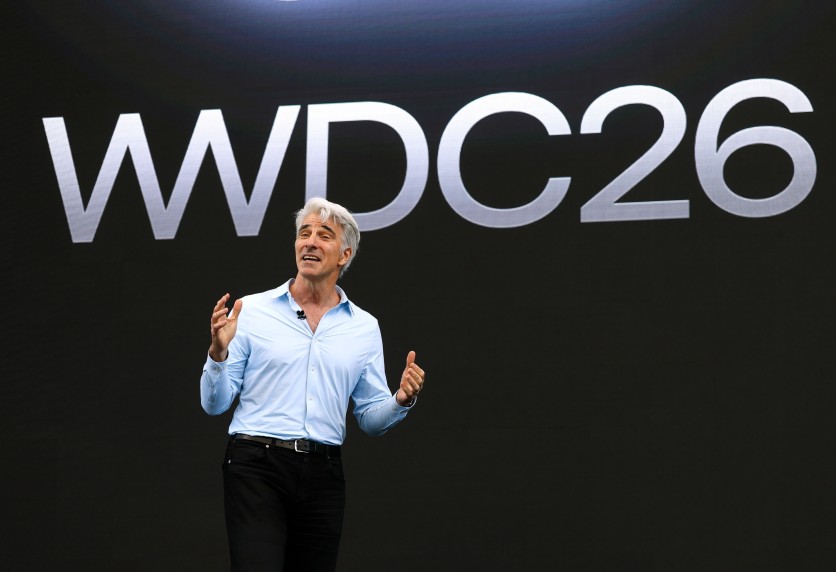
Apple moved on three fronts simultaneously in the past week — and taken together, they answer the question Tim Cook faced on his final earnings call: how does the company's AI investment become a business that lasts? In the same span of days that Apple launched its Klarna-backed hardware leasing program and Cook confirmed iCloud+ would become the revenue layer for heavy AI usage, Bloomberg's Mark Gurman published reporting that places smart glasses on a trajectory toward the health and fitness platform the Apple Watch built. The three moves are not coincidental. They are Apple sketching the next decade of its recurring-revenue model in real time.
The most immediate concern for the roughly 450 million owners of Apple Intelligence-capable iPhones is a deadline: when iOS 27 ships this fall alongside the iPhone 18 lineup, some Apple Intelligence features will carry daily usage caps — and clearing those caps will require paying for a higher iCloud+ tier. That is not a surprise to anyone who read the beta cycle closely, but Tim Cook's public confirmation on July 30 — the first time Apple has attached a pricing framework to its rebuilt Siri — makes it concrete for the approximately 1.5 billion paid iCloud and App Store subscribers who face that decision this September.
What Cook Actually Confirmed — and What Gurman Added
Cook's comment to Goldman Sachs analyst Michael Ng during the July 30 earnings call was careful but unambiguous: "We do believe there will be people that want to use it a lot and we will have some kind of upgrade possibilities on iCloud+ where people can buy up the stack on iCloud+." He acknowledged that Apple's compute-cost planning remains in early stages, but left little doubt that heavier Siri AI usage will cost more than lighter usage, starting when iOS 27 reaches general release.
Gurman subsequently clarified that the plan had been established since WWDC in June, adding that 2TB plans already carry higher limits for Siri AI and Apple Intelligence features than lower-tier subscribers. The reason is architectural: Apple Intelligence routes requests across three tiers based on complexity. Straightforward queries run entirely on the device's Neural Engine, using Apple's roughly 3-billion-parameter Foundation Model with no cloud contact and no rate-limit impact. Requests that exceed on-device capability route to Apple's Private Cloud Compute servers — Apple silicon, stateless processing, ephemeral data — and these are the queries that count against daily limits. The most demanding reasoning tasks route to Apple's custom Gemini partnership on NVIDIA Blackwell B200 GPUs within Google Cloud, under a contract that prevents Google from using Apple user queries for its own AI training.
The AI rate-limit architecture is why the 2TB iCloud+ tier is the threshold for expanded access rather than a new, purpose-built AI subscription tier. The 2TB plan at $9.99 per month had already been the gateway for unlimited HomeKit Secure Video cameras — smaller plans cap users at one or five cameras. Apple Intelligence's Home app features (AI-generated camera summaries, multi-camera activity grouping, natural-language clip search) require multiple cameras and therefore already required 2TB. AI rate-limit access layers on top of that pre-existing architecture.
The competitive framing matters for readers trying to decide what to pay. Standalone AI subscriptions from Apple's primary competitors — ChatGPT Plus, Google AI Pro, and Claude Pro — cost between $19.99 and $20 monthly. Apple's 2TB iCloud+ tier costs $9.99 per month, making it roughly half the price of a competing standalone AI subscription. But the comparison is incomplete without understanding what is already in that iCloud+ tier: if a reader's photos, device backups, and Health app data are stored in iCloud, upgrading to 2TB for AI access also means their most personal data is on the higher tier. That is not a neutral pricing decision — it is a structural deepening of ecosystem dependence that a competing AI subscription cannot replicate. Leaving Apple's AI tier later means not just canceling a subscription but migrating years of intertwined personal data.
Prior analyst predictions from 2024 suggested a standalone Apple AI subscription would run approximately $20 per month, or be bundled into Apple One at a lower effective rate — similar to how Amazon includes Alexa+ at no extra cost for Prime members. Apple's iCloud+ approach produces a lower visible price point while building stronger retention than a standalone subscription would.
Specific pricing for additional iCloud+ AI add-ons beyond the existing 2TB threshold — and the precise daily limits at each tier — have not yet been announced. Apple is expected to disclose details when iOS 27 launches, likely in September alongside the iPhone 18 lineup.
Apple Upgrade: How Klarna Holds the Paper
The iCloud+ AI tier story unfolds alongside a structural change in how Apple sells hardware that is already live: Apple Upgrade, which launched July 28, replaces the decade-old iPhone Upgrade Program with a true lease — a distinction that matters more than the monthly payment figure Apple is advertising.
Under the iPhone Upgrade Program, which Apple ran since September 2015, customers made 24 monthly payments and owned the device at term end, with AppleCare+ bundled in. Apple Upgrade replaces that structure entirely. Under the new program, Klarna — not Apple, not the customer — holds legal ownership of the device throughout the payment term. Klarna pays Apple the device's full cost upfront at enrollment, booking a clean hardware sale for Apple immediately. The customer repays Klarna monthly — over 24 months for iPhones and Apple Watches, or 36 months for Macs and iPads.
Entry pricing: iPhones from $17.99 per month, Apple Watch from $11.99 per month, Macs from $24.99 per month, iPads from as little as $11.99 monthly. Several products are excluded from the program outright — the Apple Watch SE, the base iPad, the iPhone 16, the MacBook Neo, and all business and education purchases.
What Apple Upgrade does not include: AppleCare+. Under the predecessor program, accident and theft coverage was bundled into monthly payments. Under the lease, consumers who want protection must purchase it separately, adding to the true monthly cost. The practical exposure is significant: a customer whose leased device lacks coverage if lost or stolen still owes monthly payments on a device they no longer have, plus a residual payment at term end.
Apple's timing is deliberate. The company launched Apple Upgrade six to eight weeks before the expected iPhone 18 announcement — establishing a lower-monthly-payment narrative before the sticker shock lands. If the iPhone 18 Pro Max arrives at a $200 price increase over its predecessor, as multiple analysts have projected, that increase spreads across a 24-month Apple Upgrade lease at roughly five additional dollars per month.
For Klarna, the Apple partnership is the most significant commercial win since the company's NYSE IPO in September 2025, which priced at $40 per share. Klarna's stock has since fallen roughly 56 percent to the $17 to $19 range as of the article's research date — context that matters for consumers who will be building a financial relationship with the company, not just with Apple. Klarna completed a Significant Risk Transfer securitization of $518 million in 2026, a mechanism lenders use to shift portions of consumer credit portfolios to institutional investors — signaling the company is actively managing credit exposure as its U.S. book scales.
The Apple Upgrade program also closes out a period of failed in-house fintech experiments. Apple Pay Later, its own pay-in-four buy-now-pay-later product built through Apple Financing LLC, was launched in 2023 and discontinued under CFPB pressure less than a year later as regulatory scrutiny threatened to subject buy-now-pay-later products to credit-card-equivalent oversight. Having retreated from in-house financing, Apple handed the infrastructure to Klarna, which already had a relationship with Apple Pay as an installment option at checkout since October 2024.
Smart Glasses as Health Platform: The Vision Pro Failure That Led Here
The third element in Apple's strategic week is the longest-range, and it is the one most likely to be underweighted by analysts focused on the near-term revenue picture. Mark Gurman's August 2 Power On newsletter reports that Apple's Vision Products Group is actively recruiting for a role specifically tasked with defining "the future of health, well-being and fitness experiences across vision products" — and that the recruiting language explicitly asks the candidate to translate "ambiguous opportunities at the intersection of spatial computing, wearables, consumer health and human behavior" into a clear product direction. That job listing exists because Apple tried this before and could not make it work.
The Vision Pro fitness ambition — a Fitness+ version built for the headset, with body-tracking analysis to set the experience apart from an iPad or Apple TV — was developed but never shipped. The headset proved too heavy for workout use.
Smart glasses represent the same health-platform ambition on a form factor that is not too heavy for exercise. The N50, Apple's internally codenamed first smart glasses product, is expected to debut at WWDC in June 2027, with consumer availability planned for later that year. The Gen 1 version is not expected to ship with dedicated health features — they are a future-generation goal. But the Vision Products Group is building the team now, which is how Apple's health roadmap has historically worked: the sensing capability arrives in one generation, the meaningful health applications follow in the next.
The parallel to the Apple Watch is explicit and intentional. Apple Watch launched in 2015 as an iPhone-dependent accessory with no independent value and a feature set that seemed redundant with a phone in your pocket. By Series 4 in 2018 it had FDA-cleared ECG capability. By Series 6 it had blood oxygen monitoring. Today the Watch generates revenue that pharmaceutical companies track because its health data is that significant. Apple is not describing its smart glasses as health devices because the Gen 1 product will function as one. It is describing them that way because health is what Apple does when it is serious about a product category.
The specific features Gurman's reporting surfaces as plausible candidates for future generations: glasses-based Workout Buddy features combined with a heart-rate sensor embedded in the frames (similar to what appeared in AirPods Pro 3), and camera-based form analysis for exercise activities.
What Apple's Q3 Results Say About Urgency
These three moves landed against the backdrop of Apple's strongest June quarter on record — and a stock that fell more than six percent on the guidance that followed. Apple's Q3 FY2026 results showed total revenue of $109.4 billion, up 16 percent year over year, with iPhone revenue rising 22 percent to $54.3 billion and Services reaching $30.7 billion. The record numbers were real. The market's reaction was driven by guidance for the September quarter — revenue growth of 9 to 11 percent, below the 12 percent Wall Street had modeled — and by Cook's confirmation, detailed in the Q3 earnings deep dive, that memory costs will be higher in Q4 than they were in Q3.
Cook also confirmed that September 1 will be the date John Ternus formally assumes the CEO role — meaning Ternus will inherit the iCloud+ AI pricing decision, the first full Apple Upgrade enrollment cycle, and the smart glasses health roadmap simultaneously. Three structural initiatives, none of them fully defined, all arriving with a new chief executive.
The iCloud+ AI tier is the most immediately actionable. Apple has told investors the compute costs are real, the rate limits are real, and the upgrade path is real. The specifics — what the daily limits are at each tier, whether add-on AI capacity can be purchased independently of storage — are expected when iOS 27 ships. Readers who use Apple Intelligence heavily should treat September, not today, as the moment when the cost of their AI use becomes concrete.
Is Apple's AI Revenue Strategy Different From Its Competitors'?
Whether Apple's approach — AI access bundled into cloud storage tiers — can compete with standalone AI subscription products from OpenAI, Google, and Anthropic depends on whether users make their AI decisions based on price per month or based on where their data already lives.
At $9.99 per month for the 2TB iCloud+ tier, Apple's entry-level AI access is priced below every major competing standalone AI subscription. But users who currently pay only $0.99 for 50GB of iCloud storage — and who have no particular attachment to the Apple ecosystem — face a $9 monthly increase to access expanded AI features. For them, $9.99 is not a half-price deal; it is a nine-times price increase, and a standalone ChatGPT Plus subscription at $20 per month might provide more AI capability without touching their iCloud storage decisions.
The lock-in dynamic runs the other way for users who are already deeply invested in Apple's ecosystem. For someone whose photos, device backups, and health data are already in iCloud, upgrading to 2TB for AI access costs the same $9.99 regardless of how much AI they use — and switching away from Apple later means deciding to move all of that accumulated data, not just canceling a subscription. That is the structural difference between Apple's iCloud+ AI approach and a competing standalone AI subscription. Apple is not just selling AI access. It is making AI access the reason to consolidate your data life on Apple infrastructure.
Frequently Asked Questions
Will heavy Siri AI usage cost extra, and when?
Yes, starting when iOS 27 launches this fall. Apple Intelligence features that run on Apple's server models — Image Playground, complex Siri AI reasoning tasks, and the dedicated Siri AI chat interface — have daily usage limits in iOS 27. Higher limits are available through iCloud+ plans, with the 2TB tier ($9.99 per month) confirmed by Gurman to carry higher rate limits than the 50GB or 200GB plans. Apple has not yet disclosed the specific daily limits at each tier, or whether standalone AI add-on purchases will be available independent of storage upgrades. Details are expected when iOS 27 ships alongside the iPhone 18 lineup. For more on the iOS 27 daily limits structure, see the WWDC 2026 Siri AI announcement and Gurman's July 31 iCloud+ breakdown.
Does Apple Upgrade include AppleCare+?
No. The predecessor iPhone Upgrade Program bundled AppleCare+ with Theft and Loss coverage into monthly payments; that bundling is gone under Apple Upgrade. Customers who want accidental-damage and theft coverage must purchase AppleCare+ separately, which adds to the true monthly cost of the lease. If a leased device is lost or stolen without coverage, the consumer still owes remaining monthly payments plus a residual fee to close the lease. The absence of bundled AppleCare+ is one of the most significant differences between Apple Upgrade and what it replaced, and it is the element most likely to produce financial harm for customers who assume the old program's terms still apply. See 9to5Mac's key differences explainer and the full Apple Upgrade launch breakdown for more.
When will Apple smart glasses have health features, and what might they do?
Gen 1 Apple smart glasses (codenamed N50, expected at WWDC 2027 with a late 2027 consumer launch) are not expected to ship with dedicated health features. The health-platform ambition Gurman reported is a future-generation goal that Apple is staffing toward now. Specific future features being discussed internally include workout companion capabilities (analogous to Apple Watch's Workout Buddy), a possible heart-rate sensor in the glasses frames, and camera-based exercise form analysis. The absence of health features at Gen 1 launch is consistent with how Apple built the Apple Watch — the first version prioritized ecosystem connection over independent health value, with significant health capabilities arriving in subsequent hardware generations. See Gurman's August 2 health glasses report via 9to5Mac.
Why does upgrading iCloud+ for AI access matter more than switching to a standalone AI subscription?
An iCloud+ upgrade and a standalone AI subscription (ChatGPT Plus, Google AI Pro) may cost similar amounts monthly, but they affect your data differently. An iCloud+ upgrade connects your AI access to the same tier that holds your photos, device backups, and Health data. Switching away from Apple's AI later means deciding to move all of that accumulated data, not just canceling a subscription. A standalone AI subscription from a competitor sits entirely outside your Apple data — you can cancel it without touching anything. For users who are already deeply Apple-invested, the iCloud+ approach creates a meaningful switching cost that a standalone subscription does not. That is by design, not coincidence.
ⓒ 2026 TECHTIMES.com All rights reserved. Do not reproduce without permission.