Hama Ring One Bets European Retail Can Beat Oura Where Startups Failed
Resumo
Hama GmbH, fabricante alemã de acessórios, lança Ring One, anel inteligente de rastreamento de saúde por €129 sem taxas de assinatura, apostando que distribuição varejista mainstream, não diferenciação de hardware, é a barreira real para adoção em massa de anéis inteligentes.
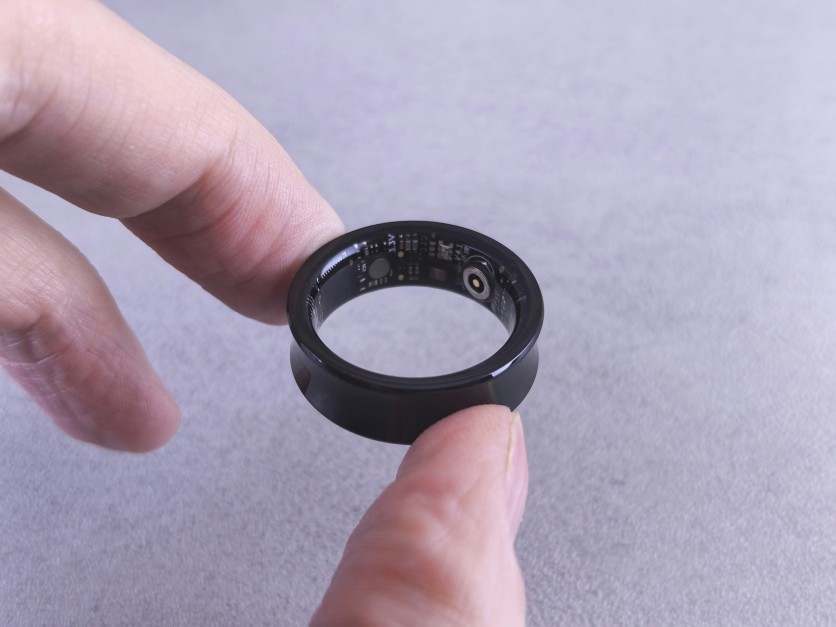
The company making your phone case and HDMI cables just entered the smart ring business. Hama GmbH & Co KG — a German accessories manufacturer founded in 1923, with roughly $679 million in estimated annual revenue and retail distribution spanning more than 20 countries — announced the Ring One on August 4, 2026: a stainless steel health-tracking ring priced at €129 (approximately $149 USD), with no subscription fees for any feature, ever.
That combination — low price, no subscription, and a company whose products already sit on European high-street shelves — is a bet that neither Oura nor any of the subscription-free startups that have entered the smart ring market in recent years have successfully made: that mainstream retail placement, not hardware differentiation, is the real barrier between the smart ring and mass adoption.
Smart Ring Market Has Won Over Early Adopters — But Not Everyone Else
The smart ring category has grown faster than almost any other wearable segment. According to Grand View Research, the global market was valued at approximately $417.5 million in 2025 and is projected to reach $502.4 million in 2026, growing at a compound annual rate of roughly 22.5% through 2033. At the same time, according to IDC data cited by Bloomberg, the smart ring category shipped approximately 4.3 million units globally in 2025, compared to hundreds of millions of smartwatches — making rings a fast-growing but still fundamentally niche category.
The barrier is not enthusiasm. A 2025 survey by Omdia found that 43% of respondents who did not own a wearable band had no plans to buy one, and cited discomfort from wearing a watch all day or overnight as a primary reason. Smart rings were specifically identified as a potential solution for those users. The barrier is how rings reach those users in the first place.
According to Grand View Research, online channels led with 63% in 2025, leaving offline retail at 37%. The report specifically noted that brick-and-mortar stores "remain critical for experiential purchases" — the kind of purchase decision where a consumer picks up, handles, and compares a product before buying. Oura sells primarily through its own direct-to-consumer website and a handful of premium partners. Ultrahuman ships exclusively via its direct store. RingConn operates online. Samsung distributes the Galaxy Ring through its own stores and major electronics retailers, which gives it a retail presence — but Samsung's ring costs $399 and is designed as an extension of the Samsung ecosystem.
None of those brands produces a ring a casual European electronics shopper is likely to encounter next to a charging cable or a Bluetooth speaker on a weekday afternoon. Hama's Ring One is designed to be that product.
What the Ring One Actually Measures
The Ring One monitors heart rate, heart rate variability (HRV), and blood oxygen saturation (SpO2) continuously, using the same photoplethysmography (PPG) optical sensing that every major smart ring on the market uses. PPG works by shining LED light — typically a combination of green, red, and infrared wavelengths — into the finger's tissue, then measuring how much light is reflected back as blood pulses through the capillaries. Because the finger has a dense capillary network and thin skin with vessels positioned close to the surface, it produces a cleaner signal than the wrist. A 2025 systematic review published in Biomimetics, covering 107 clinical studies involving approximately 100,000 participants, found that finger-based PPG achieved a heart rate correlation of r² = 0.996 against ECG gold standard for resting measurements.
One technical distinction worth understanding: what consumer smart rings call "HRV" is technically pulse rate variability — the variation in time between optical blood-volume pulses, rather than the R-to-R interval spacing that a clinical electrocardiogram measures. This applies equally to the Oura Ring 5, the Samsung Galaxy Ring, and the Ultrahuman Ring Pro; no ring-form-factor device currently measures clinical ECG HRV. For general health monitoring and sleep quality tracking, pulse rate variability is a widely accepted proxy. For clinical purposes, the distinction matters.
In addition to the cardiovascular metrics, the Ring One tracks body temperature, sleep quality, steps, and 120 sports disciplines. A menstrual cycle reminder is included. Vibration-based notifications alert wearers to incoming messages without requiring a screen check. The companion Hama Active app — already available from Google Play and used with Hama's existing smartwatch line — syncs all data without a paywall.
The Ring One is not the only new entry in this class. Two days before Hama's announcement, Casio's CRW-H001M-8 Ring Watch — a ring with a functioning LCD display and full health sensor stack — launched in China, targeting a different market segment.
What Stainless Steel Means for the Person Wearing This Thing
The Ring One's construction is stainless steel. The Oura Ring 5 is titanium. The Samsung Galaxy Ring is titanium Grade 5. The Ultrahuman Ring Pro is an all-titanium unibody. The price difference between those products and the Ring One is not coincidental — material choice is one of the primary levers a smart ring manufacturer can pull to hit a lower price point.
Titanium is approximately 40–50% lighter than stainless steel at equivalent volume. The Oura Ring 5 weighs between 2.0 and 2.69 grams depending on size. A stainless steel ring at equivalent dimensions would weigh meaningfully more. Hama has not published the Ring One's weight, but comparable stainless steel smart rings typically fall in the 4–8 gram range.
For most wearable categories, a few extra grams is a footnote. For a smart ring, it matters more than it sounds. The device's primary use case is overnight health monitoring — sleep tracking, HRV baseline, body temperature trends. Wearing a ring 24 hours a day, seven days a week, on the finger most likely to be used for sleep tracking puts weight directly in contact with the skin through every position change during sleep. The 2025 Biomimetics systematic review found that smart ring adherence drops from approximately 80% at three months to 43% at 12 months. Comfort during sleep is consistently cited as the primary driver of that drop.
Stainless steel rings are also more prone to visible scratching over time than titanium, which develops a patina that conceals minor marks. For a device worn constantly against surfaces, desks, and gym equipment, this is a practical long-term consideration.
None of this makes the Ring One a wrong choice. For a consumer who has never owned a smart ring and is deciding whether the category is worth trying at all, a €129/$149 one-time purchase is a very different risk calculation than a €429/$399 ring plus annual subscription fees. The stainless steel construction is how Hama makes that price possible.
What the Hardware Actually Delivers
Beyond material: the Ring One's 5 ATM water resistance rating means it is safe for swimming, not just showers — a meaningful everyday advantage that some lower-cost competitors do not match. The four-day battery life is modest compared to the Oura Ring 5's six-to-nine days and the Ultrahuman Ring Pro's 15-day rating. It is within the range most users would consider acceptable for a general health tracker, but it means the Ring One will require charging roughly twice per week — compared to once-per-week or less for premium alternatives.
The ring is available in US ring sizes 7 through 12. Every major smart ring competitor — Oura, Samsung, Ultrahuman, RingConn — provides a physical sizing kit for pre-purchase fitting, typically requiring 24 hours of wear to account for the natural fluctuation in finger circumference that occurs between morning (smallest) and late evening after exercise or a salty meal (largest). Hama has not mentioned a sizing kit in any launch materials, which could create friction for first-time ring buyers who do not know to ask for one. Ordering the wrong size and returning a smart ring is an avoidable frustration that sizing kits exist to prevent.
Where the €129 Bet Is Actually Being Made
Hama's real thesis with the Ring One is not that the ring will outperform Oura on sensor accuracy or software depth. The company's announced marketing rationale centers on its "Connect Story" — the idea that networked technology should reduce cognitive load rather than add to it.
What that framing leaves unstated is more concrete: Hama has 2,500 employees across 19 international locations, subsidiaries in over a dozen European countries, and a retail distribution network that places its products in electronics chains, department stores, and specialist retailers across Europe. The Hama brand is already on those shelves. The Ring One gets to skip the D2C customer acquisition problem that has cost subscription-free smart ring brands significant marketing spend.
That distribution advantage matters most in the European context. North America and Europe together account for more than 55% of the global smart ring market by revenue. European consumer electronics retail is highly fragmented by country, and a German accessories brand with established in-country retail relationships in France, Spain, the Netherlands, Poland, and elsewhere has a structural advantage over a startup attempting to replicate that retail footprint from scratch.
The closest competitive comparison is not Oura or Samsung but the wave of subscription-free mid-range rings — RingConn, Ultrahuman at entry pricing, smaller Asian manufacturers — that cluster in the €100–200 band. What Hama brings that those brands largely lack is physical retail presence and the brand recognition that comes from decades of consumer electronics accessory sales.
Whether that distribution advantage translates into meaningful unit volume depends on a question the launch announcement does not fully answer: who, specifically, is going to walk into a European electronics store, see a €129 Hama ring next to a €129 Hama Bluetooth speaker, and decide to start health tracking for the first time. The answer to that question is the one that determines whether Hama's bet pays off.
Availability and Specifications
The Hama Ring One (article number 178643-52) carries a recommended retail price of €129 (approximately $149 USD). The ring is available in US ring sizes 7 through 12, in at least one black stainless steel finish. The expert.de German electronics chain has already listed the product. Hama has not confirmed specific launch retail partners or a firm availability date beyond the August 4, 2026 announcement. The company's European retail distribution network suggests availability across the continent is expected in the near term.
Frequently Asked Questions
What makes the Hama Ring One different from the Oura Ring or Samsung Galaxy Ring?
Three things: price, material, and distribution. At €129 (approximately $149 USD), the Ring One costs roughly one-third of the Oura Ring 5 ($399) or Samsung Galaxy Ring ($399). Unlike Oura, the Ring One carries no subscription fee. Unlike both premium competitors, it is built from stainless steel rather than titanium — which keeps manufacturing costs down but results in a heavier ring, roughly 40–50% heavier than a titanium equivalent of the same dimensions. And unlike Oura or Ultrahuman, which rely primarily on direct-to-consumer online sales, Hama has an established European brick-and-mortar retail network, which means the Ring One may reach consumers who would never seek out a specialized smart ring brand online.
How accurate is a smart ring's heart rate and health tracking?
For resting heart rate and overnight health monitoring, smart rings using photoplethysmography (PPG) optical sensing perform well. A 2025 systematic review published in Biomimetics, covering 107 clinical studies with approximately 100,000 participants, found that finger-based PPG achieves a heart rate correlation of r² = 0.996 against ECG gold standard for resting measurements. Important caveat: that review covers established rings (primarily the Oura Ring, which featured in 72% of included studies). The Hama Ring One has no independent clinical accuracy validation yet — it was announced on August 4, 2026, and no third-party testing has been published. Accuracy during intense exercise is lower for all optical ring sensors, regardless of brand.
Do I need a subscription to use the Hama Ring One?
No. All data collected by the Ring One syncs to the Hama Active app without any subscription fee or additional cost for individual features. This is the same no-subscription model used by Samsung Galaxy Ring, RingConn, and Ultrahuman Ring Pro. Oura remains the primary exception in the premium smart ring segment, requiring a membership at $5.99 per month or $69.99 per year to unlock the full suite of health metrics beyond three basic daily scores.
What is heart rate variability, and why do smart rings measure it?
Heart rate variability (HRV) refers to the variation in time between consecutive heartbeats. Higher HRV is generally associated with better cardiovascular fitness and recovery capacity; lower HRV can signal stress, illness, or overtraining. Smart rings measure it continuously through optical PPG sensors on the inner band — the same technology used by clinical pulse oximeters. A technically important distinction: what consumer rings report as HRV is technically pulse rate variability (PRV), measured optically rather than from ECG's electrical signals. The two correlate closely during rest and sleep, which is when smart rings do most of their measuring. For general wellness monitoring, PRV from a smart ring is a meaningful and practical metric. For clinical diagnostic purposes, it is not a substitute for clinical ECG-derived measurements.
ⓒ 2026 TECHTIMES.com All rights reserved. Do not reproduce without permission.