Falcon 9 Too Small for ISS Deorbit: NASA Must Procure Heavier Launch Vehicle
Resumo
NASA confirmou que Falcon 9 é muito pequeno para desorbitagem da ISS e desenvolveu United States Deorbit Vehicle (derivado Dragon modificado), com desorbitagem planejada para 2028-2030.
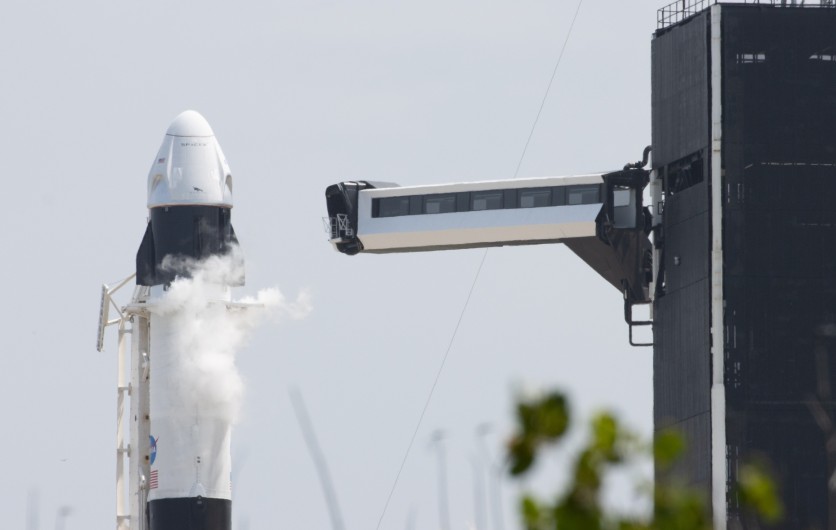
Russia's space agency confirmed the operational architecture of the International Space Station's controlled deorbit on Wednesday, telling Roscosmos via RIA Novosti that orbit lowering will begin in 2028 using two Russian Progress cargo spacecraft and end in late 2030 when NASA's United States Deorbit Vehicle — a Dragon derivative so heavily modified it cannot fly on SpaceX's own Falcon 9 — fires 46 thrusters and drives a 435-tonne (958,000-pound) orbital laboratory into the South Pacific. The announcement, which came as NASA and Roscosmos work to finalize a bilateral agreement on the precise division of responsibilities between the two agencies, closes out years of administrative uncertainty about how the largest deliberate reentry in human history will actually work — and opens a set of questions about international environmental law that neither agency has publicly answered.
The hardware at the center of it all is unlike anything SpaceX has built before. NASA awarded SpaceX an $843 million contract in June 2024 to develop the USDV, but the vehicle's specifications — disclosed at a July 2024 technical briefing on July 17, 2024 — make clear why this is not a standard Dragon mission. The USDV will carry 46 Draco thrusters: 16 for attitude control and 30 for the orbital-lowering maneuvers that will walk the station down from its current 420 km (261-mile) orbit. Its trunk section is twice the length of a standard Dragon trunk and holds six times the propellant while generating three to four times the power. Sarah Walker, SpaceX's director of Dragon mission management, described the enhanced trunk section as "almost a spacecraft in and of itself."
The consequence of those specifications is a vehicle too heavy for SpaceX's own workhorse. At a total mass of more than 30,000 kilograms (66,139 pounds) — including approximately 16,000 kilograms (35,274 pounds) of propellant — the USDV exceeds what a Falcon 9 can lift. Dana Weigel, NASA's ISS program manager, said at the same July 2024 briefing that the agency must use a heavier-class launch vehicle, in Weigel's words. NASA plans to procure a separate heavy-lift launch vehicle for the USDV at least three years before the mission. Among the candidates at the time of the briefing were Falcon Heavy, ULA's Vulcan, and Blue Origin's New Glenn. Blue Origin's New Glenn launch pad was destroyed in a static fire explosion in May 2026, a development that may affect the candidate field.
How the Deorbit Sequence Will Actually Work
The plan runs in two distinct phases separated by roughly a year and a half, with Russian hardware doing the preparatory work and the American vehicle executing the final burn.
In the first phase, beginning in early to mid-2028, the ISS will start losing altitude through a combination of natural atmospheric drag and controlled reentry maneuvers executed by the Russian segment's thrusters. Two Russian Progress cargo spacecraft will handle attitude control during this gradual descent. That phase cannot begin until adequate propellant reserves have been pre-positioned in the propellant tanks of the Zvezda Service Module and the Zarya Functional Cargo Block — a logistics requirement that NASA and Roscosmos have been formalizing in a propellant delivery agreement since at least 2024.
In mid-2029, NASA plans to launch the USDV and dock it to the station's Node 2 forward port, approximately a year and a half before the planned reentry burn. After a thorough systems checkout, the plan allows the ISS's orbit to continue decaying naturally until the station reaches approximately 330 km (205 miles) altitude — the altitude at which all crew will have departed. After a further six months of atmospheric drag, the USDV will fire between 22 and 26 of its Draco thrusters simultaneously, generating roughly 10,000 Newtons of thrust and achieving a delta-V of 57 m/s (approximately 187 feet per second, or about 127 mph / 205 kph). That burn pushes the station's orbit into a precise terminal descent, targeting a 2,000 km (1,243-mile) ocean corridor over the South Pacific.
Two Progress cargo spacecraft will remain docked to the Russian segment throughout as a contingency backup. If the USDV encounters a failure, the Russian segment's thrusters can still perform a contingency deorbit — though with less precision and margin than the dedicated vehicle.
Why Point Nemo — and Why Environmentalists Are Not Satisfied
The destination is Point Nemo, formally known as the oceanic pole of inaccessibility, at roughly 48°52.6'S, 123°23.6'W in the South Pacific. The location sits approximately 2,688 km (1,670 miles) from the nearest dry land — Ducie Island to the north, Motu Nui (Easter Island) to the northeast, and Maher Island off Antarctica to the south — as confirmed by Britannica's geographic data on the site. More than 263 spacecraft have been deorbited into the surrounding area since 1971, earning it the name "spacecraft cemetery." The Soviet-era Mir space station — which at roughly 130 tonnes (287,000 pounds) was the largest previously deorbited station — ended its life there in 2001. The ISS, at approximately 435 tonnes (958,000 pounds), will be more than three times Mir's mass.
Most of the ISS's structure will vaporize during the intense aerodynamic heating of reentry. But denser, more heat-resistant components — structural truss sections, certain pressure vessel components — are expected to survive and impact the ocean within the debris corridor, with fragments ranging from roughly microwave- to car-sized.
That is precisely what concerns the Ocean Foundation, a Washington, D.C.-based ocean conservation organization. Mark Spalding, the foundation's president, told Space.com in June 2026 that the ISS deorbit plan "raises serious concerns for ocean health" that the space community has not adequately addressed. What specific materials from the ISS will reach the seafloor, and what harm they might cause to marine life, Spalding said, has not been adequately studied or disclosed, and that uncertainty is itself the problem.
A New International Treaty — and a Legal Gap Nobody Has Closed
The environmental concern carries a legal dimension that has sharpened since January 17, 2026. That was the date the Biodiversity Beyond National Jurisdiction Agreement — commonly called the High Seas Treaty or BBNJ Agreement — entered into force after reaching its 60-ratification threshold in September 2025. The treaty, adopted by the United Nations in June 2023, establishes the first comprehensive international framework for conserving marine biodiversity in waters beyond any nation's jurisdiction. Its environmental impact assessment provisions require parties to conduct assessments for activities that may affect the marine environment in those waters when effects are unknown or poorly understood.
"It is fair to ask whether the ISS deorbit — the largest such reentry in history, targeting the high seas — should trigger that obligation," Spalding said. No such assessment has been published by NASA.
The gap Spalding identifies is structural. Under the Space Liability Convention of 1972, a nation whose spacecraft damages another nation's territory owes compensation, absolutely and without needing to prove fault. But no equivalent obligation exists for the ocean. "As a result, when space agencies have control over where debris falls, they aim for the high seas, and in doing so, they incur no legal obligation to pay for cleanup or environmental remediation," Spalding told Space.com, as recorded in the UNOOSA treaty framework.
The Ocean Foundation has called for a full environmental impact assessment of the anticipated seafloor debris field and atmospheric effects, public disclosure of all materials expected to survive reentry, and legal analysis of obligations under UNCLOS, the London Protocol of 1996, and the BBNJ Agreement. NASA has not publicly acknowledged that the BBNJ Agreement, which entered into force seven months ago, creates any obligation it must address before the deorbit proceeds.
The United States signed the BBNJ Agreement in September 2023. As of this article's publication, Senate ratification has not been confirmed, as documented by Congress.gov. Whether a signatory nation that has not ratified the treaty bears the treaty's EIA obligations is a question of international law that neither NASA nor any space agency has yet formally confronted.
Why Russia's Role Matters More Than It Sounds
The bilateral agreement NASA and Roscosmos are currently finalizing will govern what has been true in engineering for a decade: neither agency can complete the deorbit without the other.
The American solar arrays power the station's avionics, communications, and the USDV's own systems once docked. The Russian propulsion system — specifically the thrusters on the Zvezda Service Module — provides the maneuvering capability for the first phase of altitude reduction. The propellant that fuels those thrusters must be delivered by Progress cargo missions and stored in Russian tanks over a period of years before the deorbit can begin. If Russian propellant pre-positioning falls short by 2028, the schedule slips. This logistical dependency is what makes the bilateral responsibility agreement — still being finalized as of this article's publication — more than an administrative formality.
The cooperation has survived conditions that severed nearly every other bilateral US-Russia program. Roscosmos Director General Dmitry Bakanov pledged continued cooperation through the station's end of life at a press conference following the Soyuz MS-29 docking on July 15, 2026 — a commitment reinforced this week by Wednesday's formal statement to RIA Novosti.
What Comes Next in Low Earth Orbit
The ISS's retirement will not automatically leave a successor in orbit. A June 2026 Government Accountability Office report found that NASA faces significant risks of a gap in continuous human presence in low Earth orbit (LEO) if commercial successor stations are not operational before the ISS retires. A 2024 industry analysis cited in the GAO report found that a gap of even one to two years in LEO operations, without mitigation, would negatively affect every company surveyed — from potential loss of significant revenue to going out of business entirely.
As of mid-2026, the leading commercial candidates are Vast's Haven-1 station, targeting a Falcon 9 launch in early 2027; Axiom Space's first module, planned for 2027-2028 attachment to the ISS before eventual separation into a free-flying station; Starlab Space (a Voyager-Airbus joint venture), targeting 2029; and Blue Origin and Sierra Space's Orbital Reef, targeting roughly 2030 — as tracked by the National Space Society. NASA had hoped for a two-year overlap between a certified commercial destination and the ISS retirement. Whether that overlap materializes depends on schedules that have already faced slippage. In March 2026, NASA briefly introduced an alternative called "Ignition" — a government-owned core module onto which commercial companies could attach their own sections — before stepping back from the approach. As of May 2026, NASA had not finalized its acquisition approach.
Is There a Responsible Way to End the ISS?
NASA has the engineering plan. What it does not yet have is a public answer to the legal question BBNJ has forced into view: can the agency proceed with the largest deliberate reentry in history into international waters governed by an environmental treaty that entered into force seven months ago, without conducting an environmental impact assessment?
The ISS has been the most complex international collaboration in the history of human spaceflight. Its retirement is being managed, so far, as an engineering problem and a diplomatic one. Whether it will also need to be managed as an environmental law problem — and whether the precedent set by how it ends will shape how every future large-scale deorbit is governed — is a question the station's 26-year career does not settle.
Frequently Asked Questions
How will the ISS actually be deorbited, and what is the USDV?
The deorbit runs in two phases. Beginning in early to mid-2028, two Russian Progress spacecraft and the ISS's own Russian segment thrusters will gradually lower the station's orbit from approximately 420 km (261 miles) to about 330 km (205 miles). After the final crew departs, natural atmospheric drag continues the descent for roughly six more months. Then the United States Deorbit Vehicle — a heavily modified SpaceX Dragon carrying 46 Draco thrusters and six times the propellant of a standard Dragon — fires its engines and pushes the station into a terminal reentry burn targeting the South Pacific Ocean near Point Nemo. The USDV is too heavy for a standard Falcon 9; NASA will procure a separate heavy-lift launch vehicle for the mission.
Why is Point Nemo chosen, and what actually hits the ocean?
Point Nemo is the oceanic pole of inaccessibility — the location on Earth farthest from any land, approximately 2,688 km (1,670 miles) from the nearest shoreline in every direction. More than 263 spacecraft have been deorbited there since 1971, including Russia's Mir space station. Its remoteness minimizes the risk of debris landing on populated areas or in busy shipping lanes. Most of the ISS's 435 tonnes (958,000 pounds) will burn up or vaporize during atmospheric heating, but denser components — structural truss sections and pressure vessel hardware — are expected to survive reentry and reach the seafloor in a debris corridor approximately 2,000 km (1,243 miles) long. What specific materials will survive and what effects they might have on marine ecosystems has not been independently studied or publicly disclosed by NASA.
Does the High Seas Treaty (BBNJ) require NASA to assess environmental impact before the deorbit?
The Biodiversity Beyond National Jurisdiction Agreement entered into force on January 17, 2026 — roughly seven months before the ISS's deorbit plan was formally confirmed. The treaty requires parties to conduct environmental impact assessments for activities that may affect the marine environment beyond national jurisdiction when the effects are unknown or poorly understood. The United States signed the agreement in September 2023 and President Biden transmitted it to the Senate in December 2024; Senate ratification has not been confirmed as of this article's publication. Whether a signatory nation bears the treaty's EIA obligations before ratification is a question of international law. The Ocean Foundation has publicly called for an EIA before the deorbit proceeds. NASA has not published one specific to the ISS or publicly stated a position on whether BBNJ applies.
What will replace the ISS in low Earth orbit?
NASA is funding six commercial companies through its Commercial LEO Destinations program to develop successor stations. The leading candidates are Vast's Haven-1 (targeting a launch in early 2027), Axiom Space's modular station (first module planned for 2027-2028), Starlab Space (targeting 2029), and Blue Origin's Orbital Reef (targeting roughly 2030). A June 2026 Government Accountability Office report found that NASA faces significant risk of a gap in continuous US human presence in low Earth orbit if any of these schedules slip, and that NASA's funding may only be sufficient to support one commercial station rather than the two or more originally planned. A gap of one to two years would negatively affect every company operating in the LEO economy.
ⓒ 2026 TECHTIMES.com All rights reserved. Do not reproduce without permission.