Tariff Refund Windfall Hits $100 Billion: Apple Gets Billions, Consumers Get Nothing
Resumo
Apple, Amazon e Nike receberam bilhões em reembolsos federais de tarifas inconstitucionais anuladas pelo Supremo após 'Liberation Day' (fevereiro de 2026), totalizando ~$100 bilhões reembolsados de ~$128 bilhões aceitos, enquanto consumidores que absorveram custos não têm direito legal a restituição.
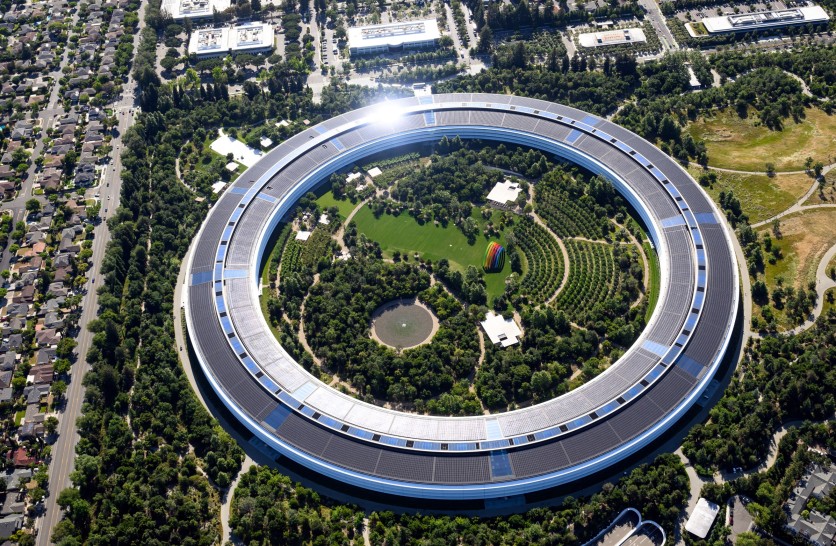
Apple, Amazon, and Nike collectively disclosed hundreds of millions to billions of dollars in windfalls from the federal government's refund of unconstitutional tariff revenue — windfalls that U.S. customs law structurally prevents American households from ever receiving, despite those same households having absorbed the tariff costs through higher retail prices. A CBP status report dated August 4 showed approximately $128 billion accepted into the agency's refund pipeline since the Supreme Court voided President Trump's "Liberation Day" duties in February, with roughly $100 billion paid out — making this one of the largest forced revenue reversals in American trade history. Not one dollar of that windfall flows to consumers under existing law, as the Cato Institute's refund analysis confirms.
What Were the Liberation Day Tariffs?
On April 2, 2025 — a date the White House branded "Liberation Day" — President Trump signed Executive Order 14257, invoking the International Emergency Economic Powers Act (IEEPA) to impose sweeping reciprocal tariffs on imports from dozens of countries. The rates ranged from 10% on many nations to elevated figures on Canada, Mexico, and China, and they rested on the administration's argument that persistent trade deficits constituted a national emergency under the 1977 statute. Economists immediately contested that framing; trade analysts noted the "reciprocal" formula bore little relationship to actual foreign trade barriers.
The levies remapped global supply chains overnight. Importers front-loaded shipments, retailers passed costs downstream, and American households bore the consequences. Democrats on the Joint Economic Committee estimated that consumers absorbed more than $231 billion in tariff costs between February 2025 and January 2026 — roughly $1,745 per family. The Tax Foundation's household cost estimate put the per-household tab at approximately $1,000 for 2025 alone. Federal Reserve Bank of New York researchers found roughly 90% of the total economic burden fell on U.S. businesses and consumers combined, with foreign exporters absorbing only about 10%.
Supreme Court Rules the Tariffs Unconstitutional
On February 20, 2026, the Supreme Court handed down a 6-3 ruling in Learning Resources, Inc. v. Trump — in which the Liberty Justice Center represented the plaintiffs in the consolidated V.O.S. Selections case alongside small businesses — holding that IEEPA does not authorize the president to impose tariffs. Chief Justice Roberts, joined by five other justices on the core holding, applied the major-questions doctrine: Congress's "regulate importation" language in IEEPA could not be read to silently delegate the sweeping power to tax imports without clear statutory authorization. Justices Thomas, Kavanaugh (joined by Thomas and Alito), and Alito dissented. The ruling vacated all IEEPA-based tariffs effective February 24, 2026.
What the ruling did not do was specify a repayment process. That task fell to the Court of International Trade in New York, and ultimately to Customs and Border Protection.
How the Refund Pipeline Works — and Why Consumers Are Locked Out
Following the Supreme Court's decision, Judge Richard Eaton of the Court of International Trade issued a universal IEEPA refund injunction requiring CBP to refund all IEEPA tariff payments. CBP subsequently launched the Consolidated Administration and Processing of Entries (CAPE) program — a four-phase electronic refund system within its Automated Commercial Environment (ACE) portal.
CAPE is structured around the cornerstone principle of U.S. customs law: only the Importer of Record (IOR) — the business entity that physically declared and paid the duty to CBP at the border — is entitled to file a refund claim. That means if Nike imported sneakers from Vietnam and paid CBP the tariff duty, Nike is the IOR and files the claim. The consumer who bought those sneakers at a higher price because Nike passed the tariff cost downstream has no legal standing to seek recovery — not through CAPE, and not through any other existing mechanism of federal customs law.
The three phases of CAPE reflect the complexity of this legal landscape:
Phase 1 (launched April 20, 2026) covered unliquidated entries and entries liquidated within 80 days of the filing date, queuing more than $95 billion.
Phase 2 (launched June 29, 2026) added reconciliation entries with unliquidated underlying entries, covering approximately $28.7 billion in additional obligations.
Phase 3, targeting finally liquidated entries more than 80 days old and estimated at roughly $11.4 billion, had reached technical readiness by late July — but the Department of Justice filed a Federal Circuit appeal in June challenging whether CBP has legal authority to refund those entries at all without each importer filing a separate lawsuit. If the government prevails, that class of importers — disproportionately smaller firms — could be left without recourse.
A structural problem runs through the entire system. As of June 29, 2026, CBP authorized $104 billion in refunds but had actually disbursed $71 billion. The Cato Institute found that 60% of refund dollars came from just 30% of all import entries — a disparity that strongly indicates most refunds have flowed to large, high-value importers, not the small businesses that often lack customs brokers, ACE portal access, and the record retention infrastructure needed to navigate CAPE.
Which Companies Are Collecting — and What They Are Doing With the Money
Earnings disclosures from publicly traded companies have begun to quantify the corporate windfall with precision. Apple reported a $2.2 billion quarterly tariff windfall — a $0.11 per-share earnings boost — contributing a 2% gross-margin lift and helping the company deliver what CEO Tim Cook called its "strongest June quarter ever." Cook confirmed that the refunds will be directed toward American manufacturing investment rather than price cuts, as part of the company's $600 billion four-year domestic investment commitment.
Amazon's $600 million tariff refund disclosure came with an outlier commitment to direct consumer relief. CFO Brian Olsavsky said the company had "identified a limited set of circumstances where we can trace that we passed specific import charges on to customers" and will proactively contact those customers and issue automatic refunds. Nike received an estimated $300 million and did not respond to requests for comment on its plans.
Not all companies are keeping the money. Walmart, eligible for approximately $2.4 billion in refunds, pledged to prioritize price cuts. "Single best return on capital" was how CFO John David Rainey described investing refunds in customer pricing during the company's first-quarter earnings call. BJ's Wholesale Club went further, already applying its refunds to retail price reductions. Costco CEO Ron Vachris told shareholders the company plans to return to members "in some form" the portion of tariffs passed on to them — though as of late June the company had not yet received its refunds. FedEx, UPS, and DHL have also pledged to return their refunds to customers.
But the incentives running in the opposite direction are formidable. PepsiCo CEO Laguarta said in a July earnings call that the tariff refund "comes in, obviously, very handy" to offset sharply higher energy and freight costs tied to the ongoing U.S.-Iran conflict. Higher energy costs, analysts note, are making it even less likely that refunds will find their way to retail prices.
What Can an Ordinary American Claim?
Will consumers ever get their share of the tariff refund?
The answer under current law is: no direct refund, and almost certainly no meaningful price relief. Goldman Sachs economists Alec Phillips, Elsie Peng, and David Mericle wrote in February that companies are unlikely to reverse tariff-related price increases nearly as quickly as they applied them. UBS chief economist Paul Donovan concurred, noting that refunds paid to importers were unlikely to flow to consumers given continued pricing pressures.
Treasury Secretary Scott Bessent anticipated the outcome almost immediately after the Supreme Court ruling. Speaking at the Economic Club of Dallas on February 20, 2026, asked whether consumers would see any of the IEEPA revenue, he replied: "I've got a feeling the American people won't see it." Later that day on Fox News, he characterized corporate lawsuits seeking refunds as "the ultimate corporate welfare."
Senator Edward Markey (D-Mass.) wrote to Amazon, Walmart, Costco, FedEx, UPS, and DHL urging them to use CAPE and pass money to consumers and small businesses. Illinois Governor JB Pritzker sent a public letter and invoice to President Trump demanding an $8.68 billion refund for Illinois residents — roughly $1,700 per household. Separate legislation proposing a broad taxpayer rebate has been introduced in the House but has not advanced out of committee.
Consumer class-action suits filed in several jurisdictions include cases against Nintendo, Costco, Lululemon, and others, on theories of "unjust enrichment" and double recovery — companies passed tariff costs to shoppers and are now collecting government refunds on the same payments. The evidentiary path is steep: plaintiffs must show that specific retail price increases were directly and causally linked to the IEEPA tariffs, which is particularly difficult because Trump layered multiple rounds of tariffs simultaneously, making attribution to any single tariff program difficult to isolate.
Tariff 2.0: New Levies Replace Old Ones
Within hours of the Supreme Court ruling, the administration imposed new tariffs under alternative legal authorities. Section 122 of the Trade Act of 1974 — which permits short-term duties to address balance-of-payments emergencies, capped at 15% and valid for up to 150 days — served as the initial bridge. Section 232 national security duties on specific product categories (steel, aluminum, pharmaceuticals) provided additional authority unaffected by the IEEPA ruling.
Section 122 expired on July 24, 2026, and the Court of International Trade had already ruled it unlawful in a separate proceeding — though a stay kept it in effect pending a government appeal. The administration finalized a Section 301 forced-labor tariff regime, now covering 99% of U.S. imports across 60 countries.
In a significant development for importers, attorneys general from multiple states filed a third major tariff lawsuit on August 4, 2026, targeting Section 301 forced-labor duties. Unlike the IEEPA duties — for which CBP was ordered to build the CAPE automated refund system — Section 301 tariff entries accumulating now have no established automatic refund mechanism. If the Section 301 duties are eventually struck down, importers and consumers could face the same legal impasse currently playing out with IEEPA, but without the benefit of a court-ordered refund pipeline already in place.
The National Taxpayers Union has called on the administration to drop its Federal Circuit appeal, expedite remaining Phase 3 refunds, and seek congressional authorization for any future tariffs: "If the Trump Administration is convinced of the need for tariffs, it can avoid future legal turmoil by seeking congressional approval in accordance with Article I, Section 8 of the Constitution."
What Comes Next
The refund saga will extend into late 2026 at a minimum. CBP must process Phase 3's finally liquidated entries — contingent on losing its Federal Circuit appeal — while an additional $25 billion in entries not covered by any CAPE phase (anti-dumping overlap, active drawback claims, entries not filed in ACE) remains without a published processing timeline. Interest on unpaid refunds continues to accrue at roughly $650 million to $700 million per month, a burden Judge Eaton noted will fall on American taxpayers.
For households, the practical outlook is clear. The legal structure bars direct recovery; congressional action to create a pass-through mechanism has not advanced; price cuts from retailers who've pledged to use refunds for consumer benefit face headwinds from elevated energy and freight costs. The households who collectively absorbed more than $231 billion in tariff costs are watching corporations announce record earnings quarters and windfall disclosures — while the government's own Treasury Secretary predicted on the day of the Supreme Court ruling that those households would see none of it.
Frequently Asked Questions
Will American consumers ever get a direct refund of the tariffs they paid?
Under current law, no. CBP's CAPE refund process operates exclusively through the Importer of Record rule: only the business entity that physically paid the duty to CBP at the border is legally entitled to file a refund claim. Consumers who absorbed tariff costs through higher retail prices have no legal standing to file a CAPE claim or any equivalent administrative remedy. The only potential paths to recovery are consumer class-action lawsuits — which face significant evidentiary challenges in linking specific price increases to specific tariffs — or new congressional legislation creating a direct taxpayer rebate mechanism. The House has introduced a rebate bill, but it has not advanced out of committee as of August 2026.
Why does customs law give refunds to corporations but not to the consumers who actually paid the higher prices?
U.S. customs law's structural design centers on the commercial transaction between the importer and the government, not the downstream retail transaction between the retailer and the consumer. The Importer of Record — grounded in statutes such as 19 U.S.C. § 1514 — is the legal entity responsible for customs duties and therefore the legal entity entitled to any refund or protest of those duties. Congress has never created a mechanism to trace tariff costs through retail supply chains and distribute refunds proportionally to end consumers. Short of new legislation, no such mechanism exists. The structural gap is not an oversight unique to this tariff episode; it reflects a foundational design principle of U.S. trade law that was built to govern commercial importers, not retail consumers.
Which major companies have committed to passing their tariff refunds on to customers?
A number of retailers have signaled intent, though implementation varies. Amazon is the clearest outlier: it has committed to proactively contacting and automatically refunding customers in the specific cases where it can trace that it passed import charges directly to those customers. BJ's Wholesale Club has already applied refunds to price cuts. Walmart, Costco, FedEx, UPS, and DHL have stated intentions to prioritize customer benefit, though the form and timing vary by company. By contrast, Apple has directed its estimated $2.2 billion refund toward U.S. manufacturing investment, and PepsiCo has said refunds are being used to offset higher energy and freight costs tied to the U.S.-Iran conflict — leaving consumers to absorb those costs through pricing rather than seeing relief.
What happens if the new Section 301 tariffs are also struck down in court?
Unlike the IEEPA duties — for which the Court of International Trade ordered CBP to build an automated refund pipeline — Section 301 lacks any refund mechanism. If courts eventually invalidate the Section 301 forced-labor regime currently covering 99% of U.S. imports, importers would need to individually file suit at the Court of International Trade to recover payments — a far more expensive and time-consuming process than CAPE. The states that filed suit on August 4, 2026 have explicitly flagged this gap: if the Section 301 tariffs are ultimately struck down, the question of how and whether those payments will be refunded — and who bears the cost of that uncertainty — will fall to the same courts and agencies still working through IEEPA and Section 122 refund litigation.
ⓒ 2026 TECHTIMES.com All rights reserved. Do not reproduce without permission.