P&G Acquires Thorne for $3.8 Billion, Betting on AI-Driven Supplement Personalization
Resumo
Procter & Gamble adquiriu Thorne por US$ 3,8 bilhões, marca de suplementos com 7 milhões de usuários e assistente de wellness baseado em IA (Taia), visando criar relacionamento direto com consumidores jovens rastreadores de saúde.
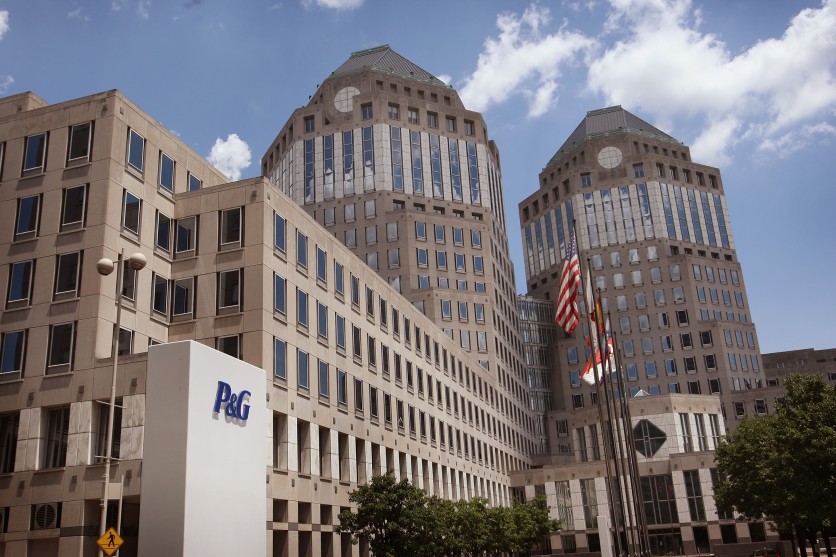
Procter & Gamble announced Tuesday it will acquire Thorne — the clinician-trusted supplement brand that built a generation of millennial and Gen Z loyalists through rigorous science and a proprietary AI wellness advisor — for $3.8 billion in cash. The deal, revealed live by P&G CEO Shailesh Jejurikar on CNBC's Squawk on the Street, transfers ownership of one of the supplement industry's fastest-growing brands from LVMH-backed private equity firm L Catterton's Flagship Fund to the Cincinnati conglomerate behind Tide, Pampers, and Gillette, pending regulatory approval and customary closing conditions.
What P&G is really buying is the answer to a problem that has quietly become existential for legacy consumer goods companies: how to own a direct relationship with the 28-year-old who tracks her sleep, her cortisol levels, and her protein intake with the same precision she once reserved for her social feed. At the center of that relationship sits Taia, Thorne's proprietary AI wellness advisor — and the seven million consumers it already knows.
What Thorne Is, and How It Got Here
Thorne was founded in 1984 by Al Czap with a mission to make the purest possible supplements available to healthcare professionals — a deliberate "thorn" in the side of the mass-market supplement industry. For four decades, that positioning held. The brand built its reputation on NSF International facility certification and NSF Certified for Sport status on select products — a designation that independently verifies formulas against more than 270 substances banned by the World Anti-Doping Agency and the NCAA — Australia's TGA certification, one of the strictest regulatory bodies in the world, and a track record of no active FDA warning letters or mandatory recalls as of mid-2025.
Today, Thorne is the top recommended clinical supplement brand among healthcare practitioners, serves tens of thousands of health professionals and more than 100 professional sports teams, and employs roughly 800 people across more than 250 products. It went public in late 2021 at a valuation of approximately $525 million. L Catterton took it private again in October 2023 in a $680 million deal. Under private equity ownership, something accelerated.
Between 2022 and 2025, Thorne's annual revenue more than doubled — from $229 million to more than $500 million — at a compound annual growth rate of over 30 percent. Its direct-to-consumer channel surged 63 percent in 2025 alone, bringing its registered consumer base to approximately seven million, up from roughly four million at the end of 2023. The company is on pace to reach $650 million in sales in 2026.
The consumer who drove that growth is not the demographic that has historically bought supplements. Thorne CEO Colin Watts told CNBC earlier this year that shoppers under 40 now account for the majority of the brand's revenue, and their mindset is categorically different from prior generations: "They don't think about supplementation as prevention. They think about it as performance. It's like, 'I want to sleep better. I want to have more energy. I want to deal with my anxiety. I want to work out better.'"
Taia: Why P&G Is Paying a Five-Point-Six Times Revenue Multiple
At 5.6 times projected 2026 revenue, P&G is paying a premium that cannot be explained by Thorne's product catalog alone. The strategic logic becomes clearer when you look at what the brand built alongside its supplement formulas: a domain-specific AI wellness advisor called Taia that runs on a large language model trained on Thorne's proprietary clinical knowledge.
Taia is not a general-purpose chatbot layered on top of a product page. It is a retrieval-augmented AI system trained on Thorne's internal database of clinical research, product formulations, and clinical health guidance data assembled over four decades by a team of researchers and physicians. When a user asks about sleep, energy, or gut health, Taia draws on that proprietary knowledge to deliver personalized supplement recommendations, lifestyle guidance, and links to specific published studies — returning answers that a general-purpose model cannot replicate because the underlying training data does not exist outside Thorne's walls.
In the first six months after Taia's launch, it fielded more than 200,000 consumer messages and generated more than 350,000 product and lifestyle recommendations. The commercial signal is concrete: consumers who engage with Taia show an eight percent higher average order value than those who do not. Thorne's chief science officer, Dr. Nathan Price, described the system's primary purpose plainly: "If Taia and personalization can meaningfully make it so that the person gets the health outcome they were looking for, we think [Taia is] going to have a very big ROI."
For P&G, the calculus is specific: Procter & Gamble has historically sold through retail intermediaries — Walmart, Target, Costco — which means the company that makes your laundry detergent does not know who does the laundry, what health conditions they manage, or what they want. Thorne hands P&G seven million identified consumers with documented health preferences, purchasing histories, and AI-generated wellness profiles. That first-party dataset is the most valuable asset in a business intelligence category that P&G's core portfolio cannot generate on its own.
Is This About Wellness — or Is This About P&G?
The Thorne acquisition arrives at a complicated moment for Procter & Gamble. In its fiscal fourth quarter, reported July 29, the company posted net income of $3.04 billion ($1.26 per diluted share), down from $3.62 billion ($1.48 per diluted share) the prior year, even as net sales rose two percent to $21.2 billion. Organic sales — which strip out currency moves, acquisitions, and divestitures — were flat for the quarter, with the health care segment posting the steepest volume decline.
In June 2025, P&G CFO Andre Schulten announced a two-year restructuring program that will eliminate approximately 7,000 jobs — roughly 15 percent of the company's non-manufacturing workforce — and is projected to cost between $1 billion and $1.6 billion in pre-tax restructuring charges, partly to offset $600 million in tariff-related headwinds. CEO Jejurikar has framed fiscal 2026 as a year of foundation-building and deliberate focus on premium brands where consumers demonstrate willingness to pay.
On the price P&G paid, Jejurikar was direct, telling Reuters the price was "a good price for the growth rates they have. It's kind of in line with the industry benchmarks we've seen." P&G's existing health and wellness portfolio — Metamucil, Align Probiotic, New Chapter vitamins, Oral-B, and Vicks — skews toward older buyers. Thorne's demographic base represents the specific gap that P&G's legacy brands cannot fill organically.
The deal was not won without competition. Consumer health company Haleon had submitted a competing bid for Thorne, Reuters reported in June, and the Financial Times noted the brand had been valued at up to $4 billion ahead of the formal announcement. Jejurikar declined to confirm whether a formal bidding war had taken place.
What P&G's Track Record Actually Predicts
The clearest parallel for the Thorne acquisition in P&G's own history is not encouraging in one specific way.
In 2012, Procter & Gamble entered the premium supplement market by acquiring New Chapter, a Vermont-based whole-food supplement brand founded in 1982 by Paul and Barbi Schulick, with a similarly strong practitioner following and a science-driven, organic-certified brand identity. At the time, P&G framed the acquisition identically to the Thorne deal today: enter the premium vitamins, minerals, and supplements segment with a credible science brand and grow it through P&G's distribution scale.
The brand survived. In July 2018, six years after the acquisition, the Schulicks departed P&G, citing what their formal statement described as "essential differences in vision and strategy." New Chapter remains in P&G's portfolio. The founders who built its credibility did not.
Thorne's situation is structurally different in one respect: the brand is led not by its original founders but by a professional CEO, Colin Watts, whose commitment to independence is explicitly framed around what P&G's distribution scale can accomplish rather than what it might compromise. What it shares with the New Chapter story is the central tension: P&G's competitive advantage lies in mass distribution and cost efficiency, while Thorne's brand value lies in the perception that it operates outside that logic. Whether scale and rigor can coexist inside the same parent company is the question the next six years will answer.
Is the VMS Industry Ready to Be Consolidated?
P&G is not moving into a vacuum. The vitamins, minerals, and supplements market in the United States reached $125 billion in 2025, according to Euromonitor data cited by consulting firm AlixPartners, and is projected to grow 11 percent through 2027. That growth is being driven by a generational shift in who takes supplements and why.
The race to own that growth has become one of consumer goods' defining competitive dynamics. Unilever acquired fast-growing gummy supplement brand Grüns in April 2026 for one point two billion dollars — less than three years after Grüns was founded, making it one of the fastest exits in the supplement industry's history. Grüns completed its close in June 2026 and now sits alongside Liquid I.V., Olly, Nutrafol, and SmartyPants in Unilever's Wellbeing portfolio. Nestlé, meanwhile, is narrowing its supplement focus to premium science-backed brands — Garden of Life, Solgar, Pure Encapsulations — while placing its mass-market lines under strategic review.
The industry context is explicit: what happened to the natural food sector in the 2010s — when independent brands were absorbed into multinationals faster than consumers could track — is happening now to premium supplements. Consumers went to farmers' markets; the brands went to General Mills. The same dynamic may now apply to the NSF-certified supplement consumers buy from their sports dietitian.
Why the Supplement Category's Regulatory Light-Touch Matters Here
One dynamic the acquisition's press materials do not address is structural: Thorne's premium positioning is built partly on voluntary quality standards that exceed what federal law requires — not because federal law is stringent, but because it is not. Under the Dietary Supplement Health and Education Act of 1994, the FDA does not approve supplements for safety or effectiveness before they reach market. Manufacturers are responsible for their own pre-market safety evaluation. No supplement brand, regardless of quality credentials, has received FDA pre-market approval analogous to a pharmaceutical drug application.
Thorne's NSF certifications and TGA listing are voluntary commitments that exceed the statutory minimum — and they are expensive to maintain. The question the acquisition raises for practitioners who recommend Thorne products is not whether P&G intends to maintain those standards, but whether the economic logic of a conglomerate facing $600 million in tariff headwinds and an ongoing 7,000-job restructuring will, over time, create pressure to reduce costs in ways that the founder-led version of the company would have refused.
How Should a Thorne Consumer Think About This?
The practical answer depends on which part of Thorne's value proposition matters most to you.
If you buy Thorne because its specific formulations are NSF-certified and clinician-recommended, the certification infrastructure is unlikely to change immediately — it is the core intellectual property P&G just paid $3.8 billion to acquire. Removing it would be like buying a luxury watchmaker and replacing the movements with mass-market parts: theoretically possible, commercially self-defeating.
If you buy Thorne because of the direct practitioner relationship and the DTC-first, personalized health model — including Taia — the picture is more uncertain. P&G is a retail-channel company at its core. Its competitive advantage comes from getting products in front of as many eyeballs as possible, as cheaply as possible. A Thorne SKU next to Metamucil and Align Probiotic on a Walmart shelf is a commercially rational outcome; whether it is consistent with the brand's clinical positioning is a different question.
The deal is expected to close in the fourth quarter of calendar year 2026, pending customary regulatory approval.
Frequently Asked Questions
Will P&G change Thorne supplements after the acquisition?
P&G's stated strategy is to preserve and grow premium acquired brands rather than integrate them into its mass-market product lines — the company made the same commitment when it acquired supplement brand New Chapter in 2012. New Chapter still operates from its original Vermont headquarters. However, the New Chapter founders departed P&G in 2018 citing differences in vision and strategy, which illustrates the structural tension between a corporate parent's efficiency imperatives and a science-driven brand's quality commitments. Thorne's NSF certifications and quality infrastructure are central to the brand's value and are unlikely to be dismantled quickly.
What exactly is Taia, and why does it matter to this deal?
Taia is Thorne's AI-powered wellness advisor — a large language model trained on four decades of Thorne's proprietary clinical research, product formulations, and health guidance data. It delivers personalized supplement recommendations and lifestyle advice through Thorne's website, generating measurably better commercial outcomes: consumers who engage with Taia show eight percent higher average order values than non-users. In its first six months, Taia handled more than 200,000 consumer messages and delivered more than 350,000 product and lifestyle recommendations. For P&G — a company that historically sells through retail intermediaries and loses customer identity data to those channels — Taia and Thorne's seven million direct consumer relationships represent a first-party health intelligence asset the company cannot build from its laundry and personal care divisions.
How does this acquisition compare to what other consumer giants are doing in supplements?
P&G is moving in lockstep with its competitors. Unilever acquired gummy supplement brand Grüns for $1.2 billion in April 2026 — less than three years after the brand launched — and already held Liquid I.V., Olly, Nutrafol, and SmartyPants in its Wellbeing portfolio. Nestlé is narrowing its focus to premium science-backed brands while reviewing its mass-market supplement lines. The U.S. vitamins, minerals, and supplements market reached $125 billion in 2025 and is projected to grow 11 percent through 2027. The race for the wellness generation's loyalty has become one of consumer goods' defining competitive dynamics — and every major consumer packaged goods company is currently in it.
Does the P&G acquisition affect whether Thorne products are independently tested and certified?
For now, no. Thorne's NSF International facility certification and NSF Certified for Sport designations on select products are independently maintained by NSF, not by Thorne or any future parent company. Those certifications require ongoing facility audits and per-product testing; they do not transfer automatically and cannot be claimed without continued compliance. Whether P&G will maintain these certifications across all current products and extend them to new product development is unknown — but given that these certifications are the primary reason healthcare practitioners recommend the brand, removing them would directly undermine the brand value P&G just paid $3.8 billion to acquire.
ⓒ 2026 TECHTIMES.com All rights reserved. Do not reproduce without permission.