What the Anthropic IPO Could Mean for Shrimp Welfare and Other Obscure Causes
Resumo
IPOs de Anthropic e OpenAI podem gerar bilhões em doações para filantropia, com pesquisadores de IA vinculados ao movimento de altruísmo efetivo direcionando recursos para causas de bem-estar animal, como iniciativas de controle de fertilidade em roedores e pesquisa sobre bem-estar de animais selvagens.
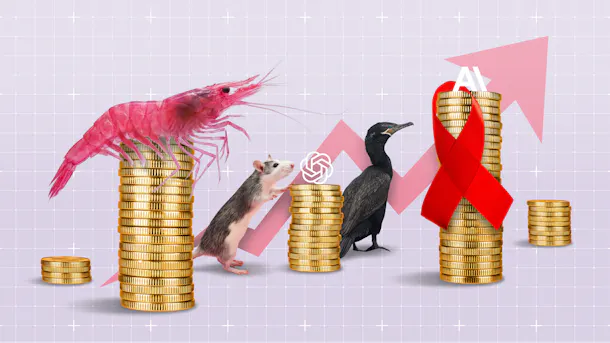
The coming initial public offerings of AI giants Anthropic and OpenAI could spell a windfall for San Francisco real estate agents, private jet companies—and wild animals.
As AI employees with fast-appreciating stock look to start cashing out, philanthropies are talking to potential donors and preparing for a possible influx of cash. And because many AI researchers have ties to the effective altruism movement, which takes a particular interest in causes that mainstream philanthropies overlook, the organizations prepping for a windfall might look very different from previous charitable waves.
Take the Wild Animal Initiative, a nonprofit whose goal is to increase wildlife welfare with an approach similar to public health interventions typically aimed at people. The initiative has funded grants to research the social lives of rats, what frogs’ calls indicate about their well-being, and indicators of stress in wild insects.
Executive Director Cameron Meyer Shorb said his nonprofit has had a few five-figure gifts from Anthropic researchers already, even before the IPO. He’s talking to another donor looking to give between $1 million and $3 million this year—a real bonanza, given the Wild Animal Initiative’s $4 million annual budget. Meyer Shorb is particularly interested in using the money to pursue research into rodent fertility control to help reduce bird extinctions on remote Pacific islands, he said.
“It takes a long time to explain what we do, and it’s different from how most people are approaching wildlife, so for many people, it’s an approach you only get to once you’ve spent a long time thinking about your philanthropy,” Meyer Shorb said. “The Ants I know,” he added, using a nickname for Anthropic employees, “and the people in that sphere are people who have the intellectual curiosity to do that much digging.”
The initiative isn’t the only little-known charity that could benefit from a wealth boom among AI employees. Adherents to EA thinking seek out causes with the criteria that they be important, “tractable”—capable of improvement—and neglected, and choose solutions based on how impactful they are per dollar.
Some EA interests are more familiar, said Kumar Garg, president and co-founder of Renaissance Philanthropy, which funds science research and has received money from EA grantmaker Coefficient Giving. That could include global health, climate, child welfare and traditional animal welfare targets. EA adherents have prized programs such as giving out malaria nets, which are particularly high impact and low cost. Some have taken up the cause of AI safety—believing that the best way to save the most lives is by avoiding human extinction that catastrophically misaligned AI could cause.
But EA’s focus on neglected problems also drives interest in more off-the-beaten-path causes. “Some of the topics are more noteworthy because they’re not on people’s top 10 list if you were interviewing people on the street,” said Garg.
The Shrimp Welfare Project
In 2021, Aaron Boddy and Andrés Jiménez Zorrilla co-founded the Shrimp Welfare Project as part of an EA charity incubator. Many of the 440 billion shrimp that are farmed each year are killed via slow asphyxiation, whereas stunners that can be purchased for $50,000 to $100,000 each can grant the shrimp a more humane death. The Shrimp Welfare Project works to give stunners to seafood suppliers and retailers.
“I kind of liked the idea that it didn’t seem like many people would be interested in shrimp welfare,” Boddy said.
The Shrimp Welfare Project started gaining traction after Jiménez Zorrilla appeared on the EA podcast “80,000 Hours” in 2022. The group estimates that each dollar for shrimp welfare helps 1,500 shrimp a year; the “(Shr)impact” page on their website says they expect to help 6.1 billion shrimp a year in total.
Last fall, Boddy wrote a post on the EA forum laying out the project’s “path to helping 100 billion shrimp a year.” Boddy argued that the Shrimp Welfare Project could absorb $5 million to $10 million, much more than its current budget of around $3 million.
The AI IPOs could offer the moment to realize that vision. Rob Reich, a political science professor at Stanford University who studies the ethics of technology and has written a book on philanthropy, said: “From the perspective of shrimp welfare, there’s a lot of money coming their way.”
Charity leaders working in the broader community of farmed animal welfare say the estimated $300 million a year currently going toward that cause could double or triple as a result of the IPO boom, an amount Humane League CEO Dan Shannon called “transformational.”
How much money could be coming to such charities is still an open question, though. A viral essay written this spring by Nan Ransohoff, who leads philanthropic initiatives at payments company Stripe, estimated that the OpenAI and Anthropic IPOs could add around $370 billion in total philanthropic assets.
Ransohoff arrived at that number through back-of-the-napkin math. The OpenAI Foundation controls 26% of OpenAI, currently valued at $850 billion, and has already pledged to donate $25 billion to health, curing diseases and “technical solutions to AI resilience,” including $1 billion over the next year.
At Anthropic, currently valued at $965 billion, co-founders have collectively pledged to give away 80% of their stakes. Anthropic also matches employees’ equity at a 1:1 ratio if they pledge to donate it to charity, up to 25% of their equity; Anthropic previously matched up to 50% donated equity at a 3:1 ratio.
EA advocates point as a precedent for outsize giving to Dustin Moskovitz, the Facebook co-founder who became the largest donor to Coefficient Giving, an EA philanthropic organization that has made $5 billion in grants since its 2014 founding.
But the timing and success of the coming IPOs isn’t certain. Anthropic is expected to do its offering as soon as next month, while OpenAI might wait until next year. And even after the companies go public, employees will be subject to lockups and potentially trading schedules that restrict when they can cash out.
It isn’t clear how many staffers at the two companies favor EA causes. And, despite popular EA pledges to donate 10% of income annually, there’s the reality that households with more than $500 million have historically only given around 1.2% of their wealth each year, according to research from the Bridgespan Group.
Contingency Planning
So philanthropic organizations tied to EA are trying to prepare for a potential cash deluge while—fittingly for a numbers-driven movement—trying to avoid becoming dependent on money that might not come.
Last month, Coefficient Giving pledged to give $1 billion this year to organizations recommended by GiveWell, an EA charity allocator focused on global health. That amount will nearly double the cumulative amount Coefficient Giving has committed to GiveWell’s recommendations over the past decade.
“This substantial increase is a one-off surge rather than a new steady state, driven most notably by our growing expectations of future giving,” the organization wrote, linking to Ransohoff’s post.
Much of the new money that does go to charities is likely to go through Coefficient Giving, GiveWell and other EA allocators such as Longview Philanthropy, which focuses on threats from AI, nuclear weapons and biological risks, said Nick Allardice. He runs GiveDirectly, which makes direct cash transfers to people living in poverty.
Allardice said he has also had conversations with AI researchers who are already looking to give away money. “I’ve had dozens of conversations over the past few months with folks who are demonstrating a level of urgency and intent and ambition that’s enough to persuade me that this is real,” he said.
Robin Goist, who runs communications at the Shrimp Welfare Project, said based on her conversations she expects the bulk of any increased giving to come through grantmaking organizations, although the project isn’t expecting any specific amount. The project wants to use additional funding to research lower-cost stunners and has started looking at expanding into interventions for the trillions of wild shrimp caught each year, she said.
Boddy is already looking toward new possibilities. In June, he left the Shrimp Welfare Project to work as a program manager at Ambitious Impact, the nonprofit incubator where he and his co-founder started the project. Inspired by the upcoming IPOs, Ambitious Impact is planning its first incubator class focused solely on animal welfare, Boddy said.
“At some point, you kind of want to think a bit more meta in terms of how can you make multiple things happen as opposed to just focusing on your own charity,” Boddy said. “We have essentially a lot more opportunities to absorb this money really well.”