Data Center Bans Top 500 as New York, Texas Join Pushback
Resumo
Governadores do Texas e Nova York decretaram pausas na aprovação de novos data centers; Texas avalia 474 GW em solicitações de conexão à rede elétrica e já hospeda complexos massivos como o de 1,2 GW da OpenAI em Abilene, enquanto residentes pressionam por restrições devido a preocupações com custos de energia, recursos hídricos e poluição sonora.
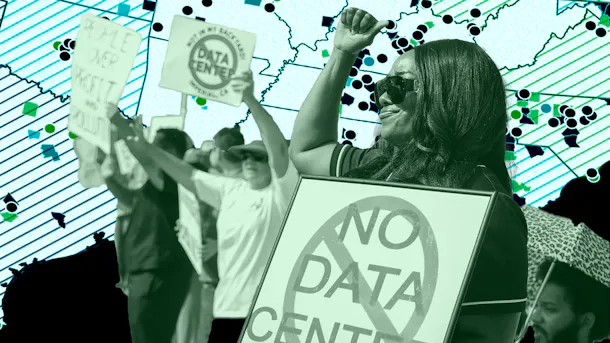
Local government resistance to data center development accelerated this summer, a warning sign for big AI companies such as Anthropic, Google and OpenAI that are pinning their compute ambitions on data center expansion.
In July alone, more than 150 towns and counties passed temporary or permanent bans on data centers, many adopted in emergency meetings. That brings the nationwide total to more than 500 active data center bans at the start of August, according to The Information’s analysis of thousands of legal documents and local news reports. When we first published our tracker of these bans in late June, we had found more than 300.
Counties and towns are blocking projects over residents’ fears that data centers will increase power bills, tap scarce water supplies and generate too much noise. Proponents counter that the projects can bring needed jobs, investments and infrastructure upgrades to rural and industrial areas and that some of the concerns are overstated. The arguments have failed to slow the tide of bans.
States led by both parties are joining cities and counties in enacting bans. Last week, Texas Gov. Greg Abbott, a Republican, ordered a pause on the construction of new data centers until state authorities can audit potential strain on utility systems.
Texas is already home to some of the most massive AI-training data centers, including a 1.2 gigawatt Lancium complex in Abilene, Texas, for OpenAI. Oracle and Vantage Data Centers’ 1.4 GW Frontier Campus in Shackelford County is another. More are planned. Abbott said the state was evaluating requests for more than 474 GW of connection to the Texas grid.
Abbott follows the actions of New York Gov. Kathy Hochul, a Democrat. In July, she signed an executive order pausing the approval of new hyperscale data centers that can consume 50 megawatts of energy or more, marking the first statewide moratorium against data center development. Few projects underway in New York state actually hit this threshold, though landmark projects in other states are targeting much higher levels.
Other states have also pulled back tax incentives for developers. In the last month, Massachusetts and Nebraska joined other states in walking back incentives for hyperscalers to build in their states.
Most of the bans are in the Midwest and South. Developers have already started some of the country’s largest data centers in these regions, drawn by cheap farmland and courted by business-friendly officials. Together, the regions are home to more than 400 of the nation’s active restrictions and nearly three-quarters of the moratoriums adopted in July.
Southern states are catching up with their own actions against data centers. Municipalities in Georgia, Florida and Tennessee have passed the most moratoriums last month.
No state moved faster against data centers in July than Florida, where 14 of the state’s 23 active restrictions were adopted last month alone. Nearly all of these happened at the county level, meaning the limitations will cover more land than in other states like Ohio or New Jersey, where bans have passed on a town-by-town basis.
In Florida, the epicenter is the Panhandle, home to all four of Florida’s permanent bans, each adopted since the start of June. The number is likely to grow: 15 more Florida jurisdictions had moratoriums under consideration as of the beginning of August, as shown by our tracker.
While bans in states like Florida have made national headlines, they’re also occurring in states including Iowa and Nebraska, where rural areas with small populations have passed moratoriums but garnered little media coverage. In the Great Plains region, which has bountiful farmland that could be appealing for hyperscale data center development, local governments have pushed through more than 40 actions against data centers since the start of the year.
Colorado has become the Mountain West’s frontier in data center bans, with a specific focus on environmental concerns and water scarcity. There are more than 19 bans around Denver and in more rural and mountainous areas throughout the state. Nearby Utah and New Mexico are also beginning to limit data centers.