Inside Tech’s Feverish Demand for Retatrutide, a Supposed Super Peptide
Resumo
Executivos de tech em Silicon Valley buscam retatrutide, um peptídeo experimental sem aprovação da FDA, acreditando que oferece maiores benefícios para perda de peso do que GLP-1s como Ozempic.

For more than a decade, Dr. Molly Maloof has had a front-row seat to Silicon Valley’s ever-evolving health obsessions as a physician and founder of M3 Healthspan, a San Francisco–based concierge medical practice serving the tech elite. Lately, those conversations have focused on one substance perceived as a wonder drug among wonder drugs: retatrutide—or reta for short.
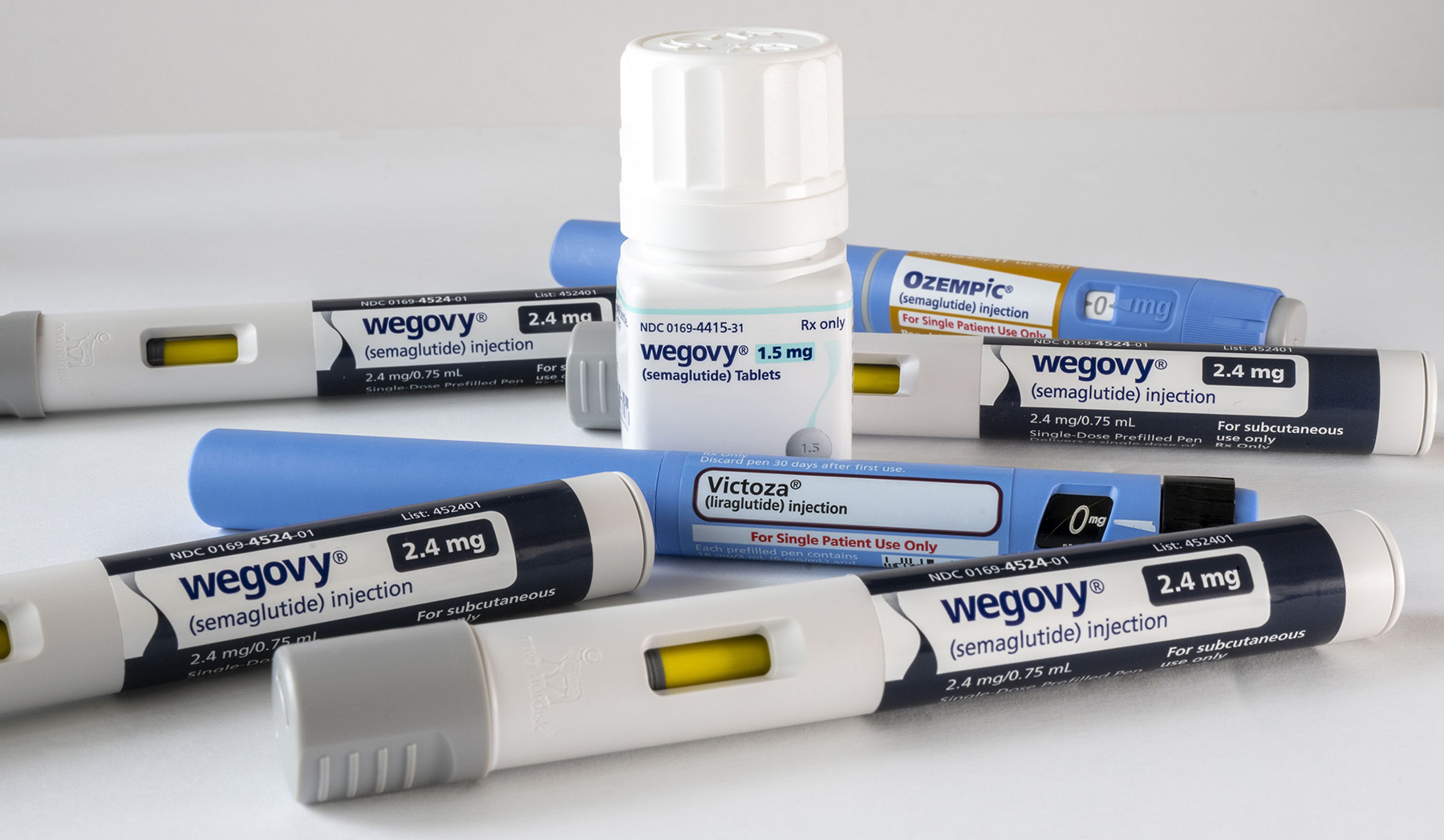
Like GLP-1s such as Wegovy and Ozempic, reta is a peptide-based drug, but it purportedly offers the potential for far greater weight loss, without the depletion of muscle people experience from those other treatments, which have already become ultrapopular. “Pretty much all my clients want to talk about peptides,” Maloof said. “And reta is the one people want to talk most about.”
Around a quarter of Maloof’s 20 patients currently take reta, up from just one or two of them a year ago. The FDA hasn’t approved it, and it cannot be purchased through an ordinary pharmacy. Maloof buys reta from Soma Peptides, a California company that claims to handle much of its peptide sourcing and manufacturing domestically. (Most vendors selling reta import the drug’s key ingredients from China or India.) While federal law prohibits the sale of reta for human use, businesses like Soma are attempting to dodge regulations by selling the drug for “research” purposes. Maloof acknowledges that she is putting her medical license “on the line” by providing it to her patients. (Soma did not respond to a request for comment for this story.)
“Technically, nobody should really be prescribing retatrutide right now,” Maloof said. Yet she’s undeterred, saying she has personally seen how reta has helped her patients with their weight and metabolic health. In her practice, Maloof holds herself to a modern addendum to the hippocratic oath. “If somebody needs something, I’m going to get it for them.”
Reta is what’s called a triple hormone receptor agonist, which means it affects three hormones involved in appetite control, blood sugar regulation and fat metabolism. (GLP-1s target just the appetite-related hormone.) Eli Lilly is developing the drug, which is seen as a possible commercial blockbuster for the pharmaceutical giant. Last month, it reported that the participants in a late-stage clinical trial who took the highest doses lost an average of 28% of their body weight after weekly injections for 18 months. That’s substantially more than the average weight loss associated with other GLP-1–based medications, which typically range from about 15% to 20% of body weight. (The drugs haven’t yet been tested in head-to-head studies.)
The tech world’s embrace of reta represents the latest chapter in a yearslong fascination with peptides that had already reached a feverish height with the mainstream introduction of GLP-1s, which tech executives have come to view as all-around miracle cures for boosting performance and sharpening mental acuity. And those drugs are purportedly far less potent than reta.
As a result, the drug has been quickly entering the tech zeitgeist. Podcaster Andrew Huberman and longevity influencer Bryan Johnson have both promoted it, with Johnson comparing it to “a new frontier AI model but for the body” after Eli Lilly released clinical trial results last month. The results also caught the attention of Elon Musk, who has previously said he used the weight loss drug Mounjaro. He posted about reta several times last month, largely to make a crass joke about the drug’s name.

All the versions of reta sold around Silicon Valley are knockoffs, part of a thriving gray market for the drug through which impatient techies acquire reta from their physicians, medical spas and dozens of e-commerce sites that rely heavily on Facebook, Instagram and TikTok marketing. Some of the techies who spoke to me got their reta from doctors like Maloof. But the more common method is to simply buy the drug directly from those online dealers. These companies sell retatrutide and other unapproved compounds under the “research use only” label, which provides a legal fig leaf.
But it is widely understood that they are selling the drugs to ordinary people seeking weight loss, according to my conversations with more than a dozen people involved in the gray market, including vendors, labs, doctors and customers. Prices vary, but a single vial of 10 milligrams of reta typically costs between $75 and $150. Such an amount would last for about two weeks at the lowest dose in Eli Lilly’s trial, though many people told me they take less. In all, the gray market for reta likely accounts for at least $100 million in annual sales, an estimate I assembled by reviewing the revenue figures of a number of large peptide companies.
The FDA has lightly cracked down on some of these vendors in recent months, issuing warning letters that accuse them of selling unapproved research peptides for human consumption. Still, the vendors are making a calculated gamble that the current FDA will never embark on a large-scale effort to combat them: The agency is ultimately controlled by Health and Human Services Secretary Robert F. Kennedy Jr., a vocal advocate for peptides who in April moved to ease restrictions on more than a dozen unapproved versions, which could soon be sold in pharmacies. (Reta wasn’t one of them.)
The FDA did not respond to a request for comment. Meanwhile, an Eli Lilly spokesperson said the company has referred dozens of “black market” reta sellers to regulators and has urged authorities to take “decisive action to fight this urgent threat to public health.” The spokesperson also highlighted how social media companies play a crucial role in the spread of bootleg reta, saying they’ve been slow to act on thousands of “illicit retatrutide posts and ads” flagged by the company.
The reta gray market can be unpredictable. In March, Peptide Sciences, a large destination for reta hunters, abruptly shut down. The company generated at least $80 million in revenue last year, according to Grips Intelligence, a platform that tracks e-commerce transactions. That estimate is likely a lowball figure: Multiple industry sources told me Peptide Sciences’ revenue was probably much, much greater. Peptide Sciences never received a public FDA warning, but its collapse reminded many people in the industry that their window of opportunity for capitalizing on the gray market can shut quickly.
A large part of reta’s appeal is its purported ability to better preserve muscle than GLP-1s, allowing people to eliminate fat without the gaunt appearance that can accompany rapid weight loss, something today’s pop culture dubs Ozempic face. Eager to avoid such a fate while slimming down, Kevin Miller, founder of GR0, a Los Angeles advertising company that works with brands like MrBeast, started getting reta from a Beverly Hills doctor around six months ago and is still taking it. He said he’s impressed with how it’s allowed him to “lose fat weight without losing muscle.”
“If it gets FDA approved, it’s going to be the biggest drug,” said Miller, who recently launched a smartphone app, Peptide Tracker, to help people track their peptide doses. Retatrutide is the most commonly tracked peptide on the app by a wide margin. “It’ll make GLP-1s look small.” And that would be something: Last year, GLP-1s accounted for $79 billion in sales.
But evidence that retatrutide preserves more muscle than GLP-1s remains largely anecdotal, said Jorge Moreno, an assistant professor of medicine at Yale University who specializes in obesity treatment. And Eli Lilly’s own studies show that more than a quarter of the patients taking the largest doses reported side effects like nausea, diarrhea, constipation and vomiting. (That is on the higher end of side effect rates reported in past studies of GLP-1–based drugs.)
Moreover, buying knockoff reta means people won’t really know what they’re receiving, Moreno said. Gray-market versions of the drug don’t follow any standardized manufacturing guidelines, and Moreno likened the bootlegging to baking: The same ingredients can produce either “a really good croissant or a really bad croissant,” depending on the process.
Before Maloof began offering reta to her patients, she toured five U.S.-based labs that all produced a version of the drug. At one lab, Maloof noticed workers packaging peptide vials without gloves, potentially contaminating them. “I was horrified,” she said. She eventually went with Soma Peptides, which she deemed high quality.
Moreno said he has treated patients who suffered severe nausea, vomiting and diarrhea after taking gray-market peptides, though it’s not clear how many were specifically using retatrutide, since many patients aren’t keen to fess up about what gray-market substance they’re taking. Some of his sickened patients ended up in the emergency room, he said.
In Miami, physician Jesse Morse thinks he is doing his patients a service by providing them with reta: After all, he has carefully vetted his supplier of the drug, and he can monitor how patients’ bodies respond to it. “I’d rather them get it from a quality source who’s guiding and monitoring them than have them randomly buying it from the internet and just poking themselves,” he said. More than 100 of Morse’s patients are currently taking reta—and so is he. His patients range from elderly people who need to lose weight to the wealthy Miami techies and financiers who just want to “optimize,” he said.
Morse said several of his patients have stopped taking reta due to side effects, including diarrhea, constipation and dysesthesia, a condition that can lead to a painful burning or tingling triggered by touch. He tries to minimize side effects by keeping most patients on doses below 4 mg per week. (In Eli Lilly’s latest trial, the highest dose was 12 mg per week.) The most common issue he has observed is a heart rate that is up to 15 beats per minute faster, which would represent a 20% increase for the average person.
“Most people don’t feel it,” he said. “Some do.”
There has long been a booming gray market for peptides. For years, bodybuilders and biohackers have bought experimental versions of the drug online, believing they promote muscle building and injury recovery, among other uses. (Peptide Sciences, for example, launched its website in 2013.) The market remained relatively niche until the rise of Ozempic, Wegovy and other GLP-1-based drugs.
But then in March 2022, a shortage of the brand-name GLP-1s led the FDA to temporarily allow labs separate from the big pharmaceutical companies to make their own custom—or compounded—versions. Numerous websites sold those compounded drugs, and people grew comfortable with shopping for peptides on the internet. In early 2025, the FDA ended its temporary allowance for the compounded GLP-1s, but many consumers still continue to seek out these cheaper generic alternatives, especially as more insurers are reducing or eliminating coverage for brand-name GLP-1s.
As a result, new peptide companies seem to pop up almost daily. One of the latest is Pepify, which essentially acts as a Shopify for peptide peddlers. The company offers entrepreneurs who want to sell peptides everything they need to start an e-commerce business in 24 hours, according to its website. The site also claims that more than 200 brands have launched storefronts through its platform.
For a $97 monthly subscription, Pepify handles the sourcing and shipping of peptides for its merchant clients. Its catalog includes more than 40 peptides, including five different dosages of reta. The economics of reta dealing can be lucrative: For instance, Pepify charges $18 for a 5 mg vial and suggests retailers using its platform mark up that dosage to $55. The company said in a statement that it works “with research companies for their testing purposes only” and “pride ourselves on running a legitimate business.”
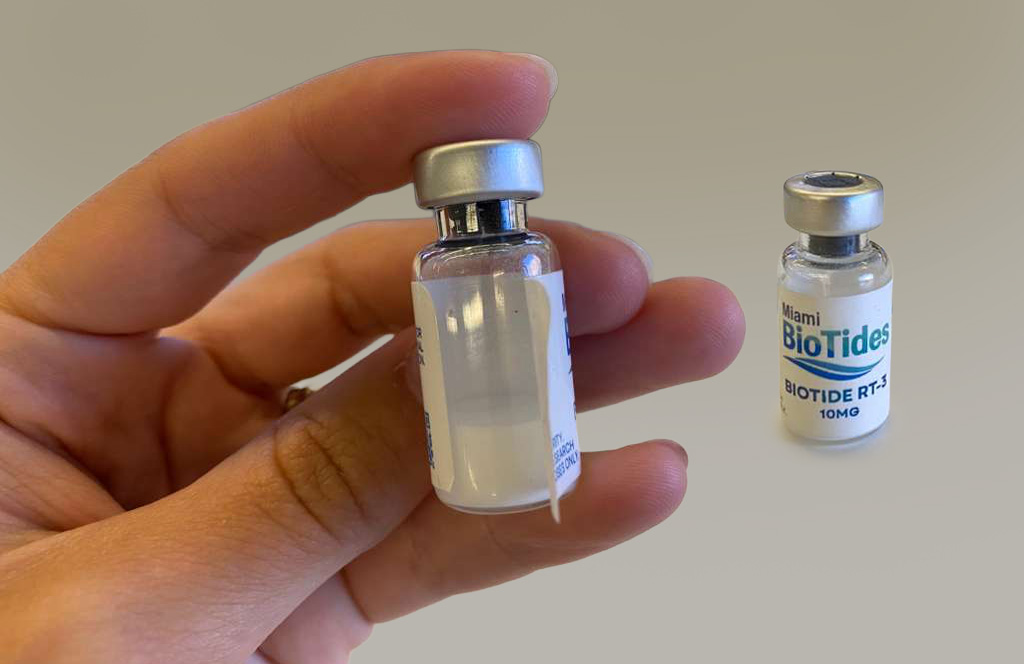
After hearing about how easy it is to obtain reta, I decided to test the gray market, ordering a 10 mg vial from a company called Miami BioTides. The Florida-based e-commerce site was founded by Rob Fuller, a local luxury real estate broker affiliated with Sotheby’s. Fuller has promoted the weight loss benefits of reta in posts on Facebook and TikTok. On Miami BioTides’ website, where he sells 25 different peptides, he has rebranded reta as “RT3.”
Rob Fuller, who sells unapproved peptides through his site, Miami BioTides, frequently promotes retatrutide in shirtless TikTok videos.
The cost of my Miami BioTides order came to $109.68, and like many gray-market vendors, his Miami Biotides does not take credit cards. Instead, it accepts payment through Cash App, Zelle and bitcoin, an option that receives a 30% discount. I chose to use Zelle, and the Miami BioTides website flashed warnings at me during checkout: “Please DO NOT provide purchasing details in the notes. DO NOT write ‘PEPTIDES.’”
Three days later, a turquoise envelope with a Miami BioTides sticker on the back arrived. Inside, my vial of reta lay cushioned in bubble wrap, a quarter of it filled with a freeze-dried white powder. (If I had wanted to actually use the reta, I would’ve needed to mix it with bacteriostatic water, then inject myself with the solution. Technically, bacteriostatic liquid requires a prescription—but many gray-market peptide vendors sell it without asking for one.) In all, ordering reta online was as easy as buying a dress.
For more than a year, Duncan Lutz, a software engineer at SpruceID, a New York–based digital identity startup, had heard friends talk up about peptides. He decided to begin seriously researching them two months ago. A friend suggested he try reta. “I did more research and saw 28% body weight reduction in one year: Like, that’s crazy,” said Lutz, who said issues with weight run in his family.
To familiarize himself with the reta gray market, Lutz spent a lot of time reading X posts about the peptide and also discussed the drug with Anthropic’s Claude chatbot. He assembled a five-page PDF he made listing the pros and cons for 16 different peptide sources, including both Chinese and American vendors. “Decent pricing,” he wrote in the pros list for one vendor, Shanghai Synthetic Peptides Bio. Cons: “Some talk about cloudy product, probably not great.”
His friend recommended ordering reta from Peptide Crafters, a U.S.-based peptides vendor, and in the end, he purchased 30 mg for $200. (Peptide Crafters could not be reached for comment.) Though it was more costly than buying directly from a Chinese manufacturer, he reasoned that a domestic distributor was more trustworthy.
Once Lutz received it, he began taking 2 mg weekly for a month, working his way up to 6 mg. For the first few days he took reta, Lutz said he felt mild nausea, but the symptoms didn’t linger. His craving for food has “greatly diminished,” he said. His issue now is eating enough to prevent the loss of too much weight. When I first spoke with him on the phone on May 26, he told me he was down to around 275 pounds, 35 pounds less than his weight when he began taking the drug about two months earlier.
On Monday, Lutz texted me an update. He’d lost another 10 pounds, but he was slightly cutting back on his doses—from 6 mg to 5 mg. The weight loss was “crazy but not healthy lol,” Lutz wrote. “It’s too powerful.”
Overall, Lutz said he is thrilled with the results, and he has “evangelized” the drug to around five friends, who are also now on reta. “I’m totally willing to take the side effects in exchange for the benefits,” he said.
For Karina Repko, founder of San Francisco–based AI health assistant startup Miora, the reta experience was very different. Repko said she began taking reta after meeting with Dr. Jonathann Kuo, founder and CEO of Extension Health, a New York City longevity clinic. Repko recalled Kuo expressing surprise that she hadn’t tried a peptide before.
“How can you be a health founder and not be on peptides?” he asked, according to Repko.
Kuo said he got reta for Repko because she is a “friend,” and he denied providing it to other patients. He said he got the reta from a compounding pharmacy he declined to name. Once he’d given the reta to Repko, she let it sit in her refrigerator for a couple of weeks while she scoured X, Reddit and TikTok for accounts from people who had taken it, and she watched YouTube videos on how to inject it into her hip.
After a friend agreed to start reta with her, Repko began taking the drug last month. In three weeks, she lost 10 pounds. She soon regretted the side effects, though. For the first few days on reta, she said, she was “a bit depressed.” (“I’m usually a very happy and energetic person,” she said.) In the following weeks, she felt she lost both her sex drive and her creativity, which she thought impacted her productivity at work. (Some preliminary studies of GLP-1s show a possible link with anhedonia, a reduced ability to experience pleasure.)
“That’s why I stopped,” she explained.
Some of the more cautious techies who buy reta online opt to send off samples to third-party testing labs before starting a regimen. One of the most prominent labs, Finnrick, actually sprouted from Silicon Valley’s peptide culture: It launched in October 2024 after a discussion between tech investor Naval Ravikant and Michael Carter, co-founder of Playco, a Sequoia Capital–backed gaming startup.
“Naval was going around the valley talking to his boardroom friends about peptides, and Carter just asked, ‘How do you know this particular vendor is any good?’ Then the two of them hatched the idea,” recalled Finnrick CEO Raphaël Mazoyer, who’d previously done digital marketing for consumer brands including McDonald’s and Godiva Chocolatier and who joined Carter and Ravikant as a third co-founder.
Finnrick processed nearly 2,300 samples last month, 43% of which were reta, making it by far the lab’s most commonly tested product. Compared to last summer, the lab now receives more than three times as many reta samples each month. (The company currently offers free testing of 15 common peptides for U.S.-based consumers; companies that hope to sell peptides have to pay.)
In total, Finnrick has examined more than 3,700 reta samples, and about 20% failed at least one of the tests conducted by the startup, Mazoyer said. Those tests examine a variety of factors—from purity levels to the presence of endotoxins and heavy metals. Around 3% of the samples advertised as retatrutide included an entirely different peptide compound, he added.
Peter Magic, founder of Janoshik, a peptide-testing lab in the Czech Republic, said about 5% of samples sent to his company contain the wrong compound or dose. The number of reta samples sent to his lab increased fivefold last year, and it is now the second most commonly tested peptide at his lab (behind only tirzepatide, a GLP-1 approved by the FDA in 2023). “The popularity is ever increasing,” Magic said.
The shutdown of Peptide Sciences has fueled a growing sense of foreboding among reta’s proponents. I spoke to numerous doctors and people taking reta who worry that their supply could be cut off if Eli Lilly pursues litigation against the knockoff dealers—or if the FDA actually steps up its policing.
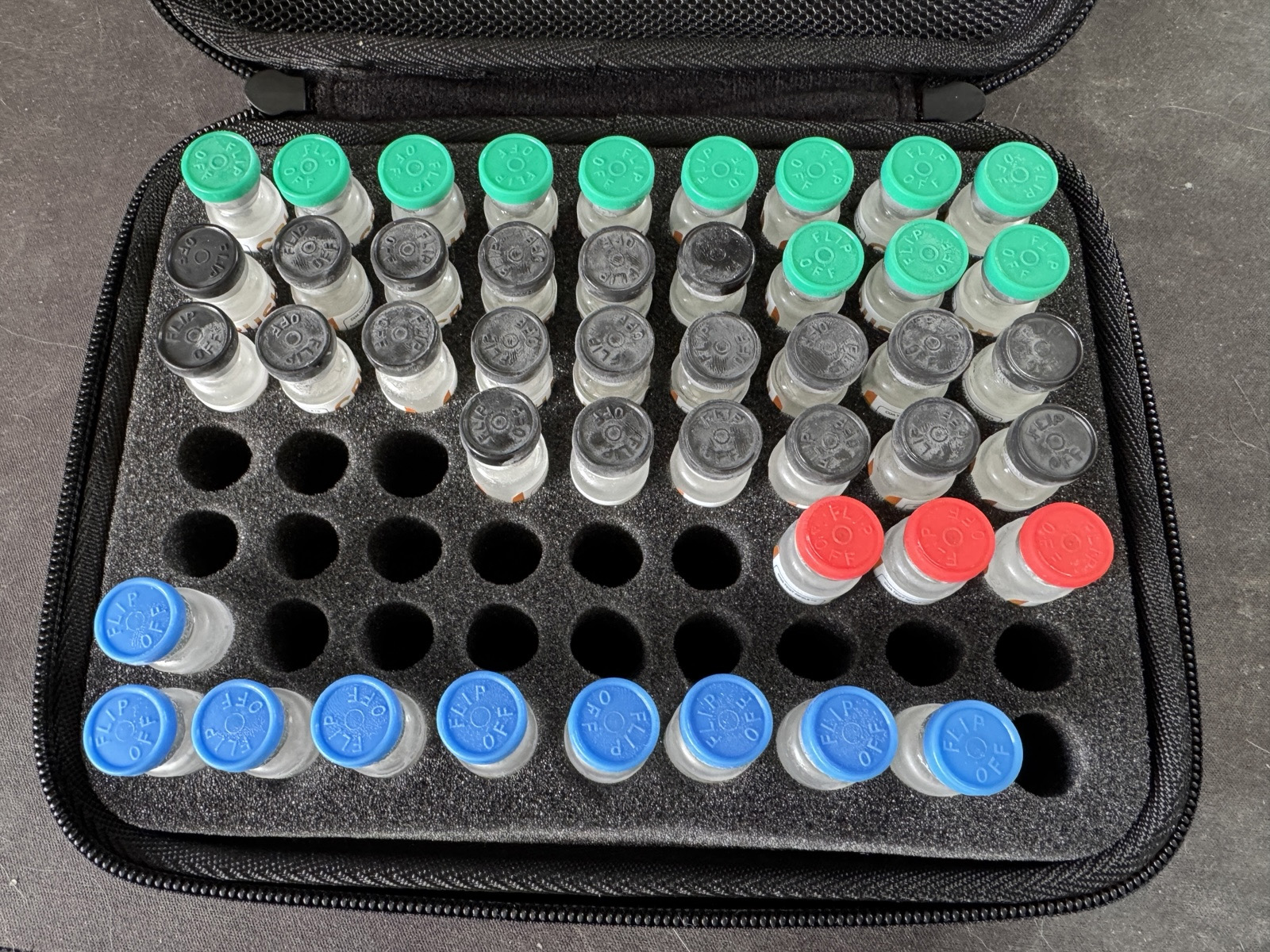
Lutz, the software engineer, is concerned enough that he and his wife recently stocked up on a year’s supply of reta. He now has dozens of glass vials in a black case stored in his freezer. “I don’t know if this stuff will be around forever,” he said. “I’m telling everybody: Get in on this while you can—it’s a miracle drug.”

In March, a Wellington, Fla.-based vendor, Pink Pony Peptides, received an FDA warning letter alleging that its marketing made it clear the company was selling peptides for human use. The agency cited claims on Pink Pony Peptides’ website that reta could suppress appetite, regulate blood sugar and “torch body fat.”
While that language has since disappeared from the site, reta remains for sale under the name PinkPony-3 RT. The company’s TikTok account also continues to feature videos promoting retatrutide and other unapproved peptides.
“I’m not worried about the letter, and you shouldn’t be either,” said Pink Pony Peptides’ owner, Susan Wachowich, in an April TikTok video. “Oh no, my company is crushed,” she continued sarcastically. “Just kidding, we’re still going to be here.” A lawyer for Wachowich said the Pink Pony Peptides founder is “cooperating fully with the FDA to address the agency’s concerns” and is “not in a position to comment” on specific questions.
Despite fears that the reta gray market could be shut down, Maloof, the San Francisco physician who has already given it to her patients, argued we may be past the point of no return.
“The gray market will probably continue even after Eli Lilly releases the drug,” she predicted. “It’s going to be like whack-a-mole for them there. It’s going to be very difficult for them to keep track of every single manufacturer.”